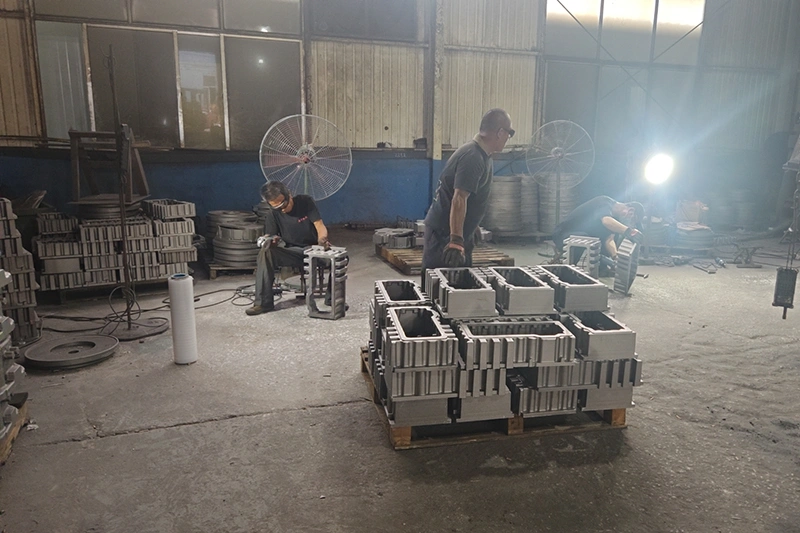
Yes, you can reuse sand from sand casting multiple times. Most foundries reuse up to 98% of their casting sand, replacing only 2% with fresh sand daily to maintain quality.
The number of reuse cycles depends on the sand type. Green sand (clay-bonded) lasts 20-30 cycles, while resin-bonded sand only works for 3-5 cycles before requiring expensive reclamation.
This guide explains how sand reuse works, when sand becomes unusable, and what costs you’ll face if you want to reclaim sand properly.
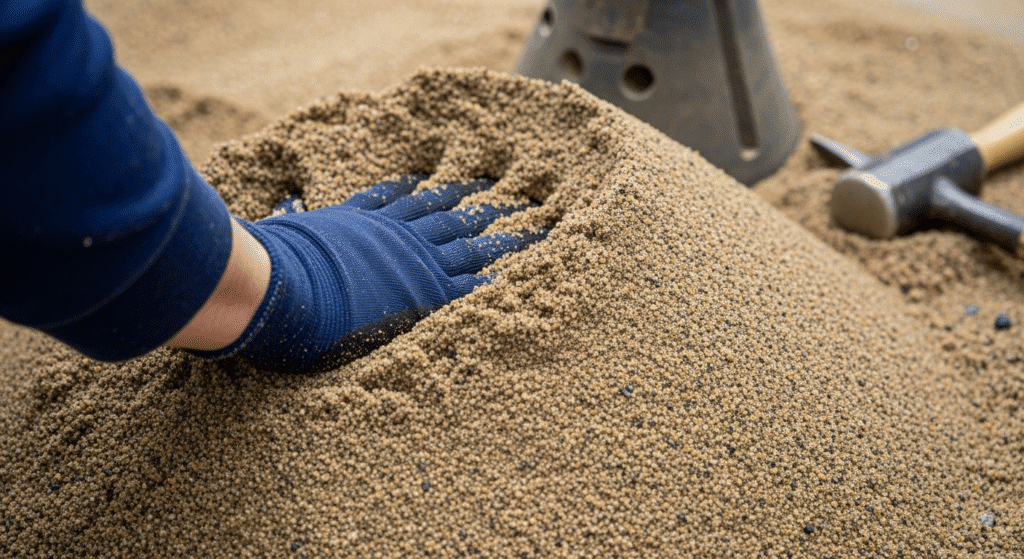
Sand casting uses sand molds to shape molten metal into parts. The process requires large volumes of sand that can withstand extreme temperatures while providing the right texture for detailed castings.
Major foundries reuse more than 800,000 tons of sand annually. This isn’t just about cost savings—new sand disposal creates environmental problems and mining virgin sand depletes natural resources.
The reuse potential varies dramatically based on the sand type and binding system you’re using.
| Sand Type | Reuse Cycles | Key Characteristics |
|---|---|---|
| Green sand (clay-bonded) | 20-30 times | Most reusable; requires moisture and clay adjustment between uses |
| Standard foundry sand | 5-15 times | Moderate reusability; thermal stress gradually degrades binding capacity |
| Resin-bonded sand | 3-5 times | Least reusable; requires thermal or mechanical reclamation equipment |
Heat exposure breaks down the sand’s binding properties with each casting cycle. Each reuse reduces clay effectiveness by 10-15%, requiring you to replenish binders to maintain mold strength.
Sand particles also change physically over time. They become finer and rounder as grains rub against each other during shakeout and handling. Eventually, the particles get too fine to provide adequate mold permeability.
Contamination accumulates with repeated use. Metal residue, burnt binder materials, and dust gradually coat sand grains, reducing their ability to bond properly and creating potential defects in castings.
That’s why many foundries follow a continuous replacement strategy. They add 2% fresh sand daily while recycling 98%, which maintains consistent sand properties over time without complete system replacement.
Sand reclamation cleans and restores used sand so you can cast with it again. The process differs significantly between green sand and chemically bonded sand systems.
Green sand reclamation is the simplest and most cost-effective approach.
Step 1: Shakeout
You separate the sand from the finished casting immediately after it cools. Shakeout systems use vibration or mechanical agitation to break apart the mold and free the sand.
Step 2: Magnetic Separation
Magnetic separators pull out residual metal particles from the reclaimed sand. This step is critical for ferrous castings—even small metal fragments can cause defects or damage equipment in subsequent casting cycles.
Step 3: Screening
Screens filter out non-magnetic debris like slag, burnt clay, and oversized particles. This creates uniform grain size distribution, which affects mold permeability and casting surface quality.
Step 4: Testing and Reconditioning
You test the sand’s moisture content, clay activity, and compression strength. Then you add water, bentonite clay, or other additives to restore the sand’s casting properties. Green sand needs 2-8% moisture content and 6-10% bentonite clay to work properly.
Step 5: Return to Storage
The reconditioned sand goes back to storage bins, ready for your next molding operation. The entire cycle typically takes minutes, allowing continuous foundry operation.
Resin-bonded and other chemically bonded sands require more aggressive reclamation because residual resin films coat the grains.
Mechanical Reclamation
This method uses friction to scrub resin and coatings off individual sand grains. Sand grains rub against each other in attrition chambers, removing contamination through abrasion.
The process costs approximately $1 per ton. However, it changes grain shape—sharp edges get rounded off and extracted as dust. This alters the sand’s packing density and permeability characteristics.
Thermal Reclamation
This method heats sand to 650°C or higher in a fluidized bed or rotary kiln. The high temperature burns off all resin, coatings, and organic contaminants, leaving clean sand grains.
Thermal reclamation costs $6-8 per ton but produces better quality reclaimed sand. It completely removes contaminants rather than just abrading them off, giving you sand properties closer to virgin material.
Most foundries prefer thermal reclamation despite the higher cost. The superior sand quality reduces casting defects and extends the number of reuse cycles you can achieve.
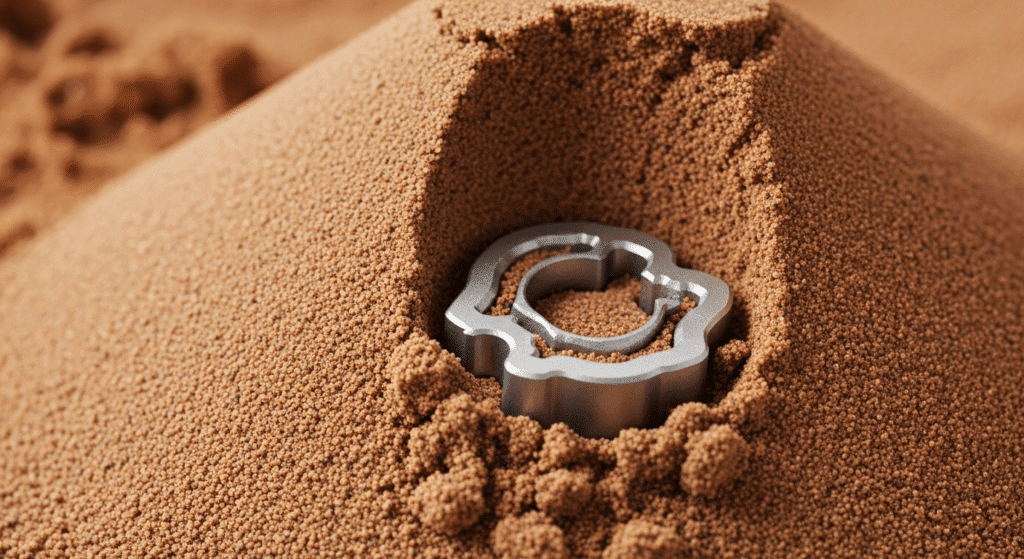
Sand reaches the end of its useful life when it fails quality tests or causes repeated casting defects.
Sand particles become too fine after extensive reuse. Fine particles reduce mold permeability, which traps gases during metal pouring and creates porosity defects in your castings.
You’ll notice the sand feels smoother and less gritty. This change in texture indicates grain size has decreased beyond acceptable limits for your casting requirements.
The sand won’t hold a mold shape reliably. When you form a test mold or squeeze a handful of prepared sand, it crumbles easily instead of maintaining its shape.
This happens because clay particles degrade chemically and lose their binding effectiveness. Even adding fresh bentonite won’t restore proper molding characteristics when the base sand has degraded too much.
Metal residue, burnt binder materials, and fine dust coat sand grains despite reclamation efforts. You’ll see discoloration—the sand darkens from light tan to dark brown or black.
High contamination shows up in loss on ignition tests. When you burn a sand sample, the percentage of material that burns away indicates organic contamination levels. Above 5-7%, the sand needs replacement.
Your sand fails standardized tests for casting-critical properties:
You’ll see more surface defects like rough finish, scabs, and metal penetration. These indicate the sand can no longer create a smooth, gas-permeable mold surface.
Defect rates climbing above 2-3% signal sand quality problems. At this point, the cost of rework and scrap typically exceeds the cost of fresh sand replacement.
Degraded sand creates predictable casting defects that hurt both appearance and function.
The casting surface looks rough and grainy instead of smooth. This happens when sand particles become too coarse or when fine dust fills the gaps between grains.
Coarse sand (low AFS fineness number below 50) allows molten metal to penetrate between grains, creating a rough texture. You’ll spend more time grinding and finishing castings to meet customer specifications.
Metal penetration occurs when molten metal flows into gaps in the mold surface. You’ll see this as a rough, uneven casting surface with sand grains embedded in the metal.
Three factors from degraded sand cause this defect. Sand grains that are too coarse leave large gaps between particles. Loss of mold wash or coating allows direct metal-sand contact. High pouring temperatures combined with low sand refractoriness let metal flow into the mold surface.
You can’t easily machine away metal penetration—it extends below the surface, requiring heavy stock removal that changes part dimensions.
Scabs appear as raised areas on the casting surface where a layer of sand and metal fused together. Inclusions are sand particles trapped inside the casting that create weak spots and stress concentrations.
Both defects result from loose sand particles breaking free from the mold during pouring. Degraded binding in old sand makes the mold surface friable, shedding particles into the molten metal stream.
These defects often don’t appear until machining exposes them. That’s when you discover the parts must be scrapped, wasting both the casting and the machining time invested.
Tiny holes and voids form inside the casting when gases can’t escape through the mold. This happens because fine particles in degraded sand reduce permeability.
The mold can’t breathe properly. Steam and gases from binder breakdown get trapped, creating pressure that forces gas bubbles into the solidifying metal.
Porosity weakens the casting and creates leak paths in pressure vessels or fluid-handling components. You can’t repair it—the part is scrap.
Fine sand grains give you smooth casting surfaces but reduce permeability and trap gases. Coarse sand provides good gas escape but leaves rough surfaces.
Degraded sand loses the balance between these competing requirements. As particles break down unevenly, you get both fine dust (blocking permeability) and enlarged gaps (causing surface defects) in the same mold.
This makes it impossible to achieve both smooth surfaces and defect-free internal structure. You’re forced to compromise quality or replace the sand.
When sand can no longer serve in casting operations, it still has value in other applications rather than going straight to landfills.
The EPA has evaluated silica-based spent foundry sand from iron, steel, and aluminum foundries and supports its beneficial use in several applications.
Road Construction and Subbase
Spent foundry sand works well as a foundation layer for roads. It compacts effectively and provides stable support for pavement. This is an EPA-approved application that diverts sand from landfills while reducing the need to mine virgin aggregate.
Concrete Production
You can substitute 10-33% of natural sand with spent foundry sand in concrete mixes. Research shows this replacement delivers compressive strength within 5% of control mixes made with 100% natural sand.
Soil Amendments and Manufactured Soils
The EPA and USDA encourage using spent foundry sand in manufactured soil products. The sand improves soil drainage and structure when blended with organic materials.
Geotechnical Fill
Construction projects use spent sand as engineered fill material for embankments, backfill, and site grading. The sand’s predictable physical properties make it suitable for these structural applications.
Squeeze moistened sand into a ball—it should hold shape but break cleanly when dropped from waist height. Check color (light tan is good, dark brown means excessive contamination) and test permeability if you have equipment.
Yes, mixing 10-20% fresh sand with reclaimed sand is standard practice. This maintains consistent grain size distribution and replenishes sand properties without completely replacing your sand system.
Mechanically reclaimed sand has rounder grains with less sharp edges, affecting packing density. Thermally reclaimed sand comes closer to virgin sand quality but costs more. Green sand reclamation with reconditioning can match virgin sand properties.
Green sand lasts several months in covered storage if you maintain moisture content at 2-8%. Dry sand loses bonding properties, while overly wet sand promotes mold growth and clay degradation.