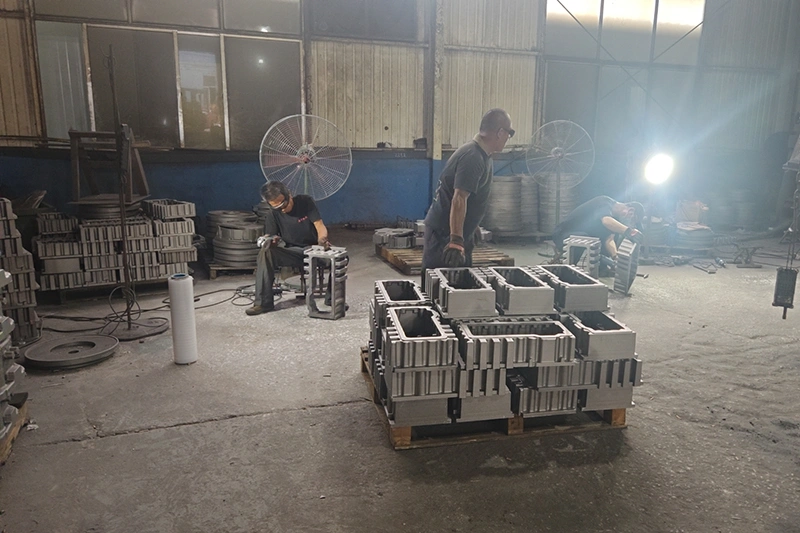
Making cores for sand casting is essential when you need hollow sections or complex internal features in your cast iron parts. The core creates the void spaces inside your casting that would be impossible to achieve with the mold alone.
The process requires careful attention to detail but isn’t overly complicated. You’ll mix special sand with a binder, shape it in a core box, and then cure it to make it strong enough to withstand molten metal.
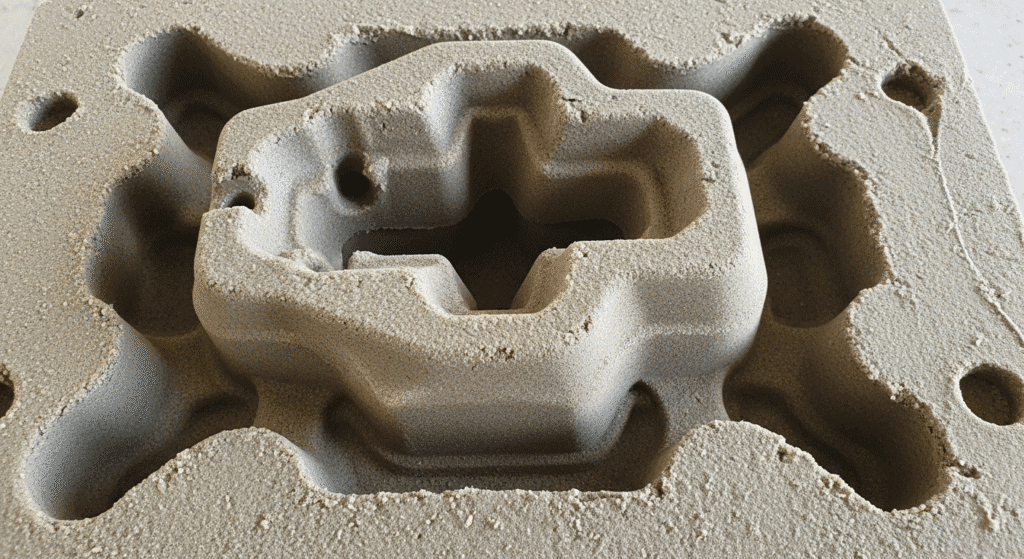
Your core box determines the exact shape of the hollow space in your finished casting. Clean it thoroughly and apply a release agent to all surfaces that will touch the sand.
The release agent prevents the sand mixture from sticking to the box walls. You can use commercial mold release sprays, or simply dust the surfaces with talc or graphite powder.
Fill the core box with your prepared sand mixture, packing it firmly to eliminate air pockets. The sand needs to be compressed enough to hold its shape but not so tight that gases can’t escape during casting.
Use a ramming tool to compress the sand in layers. Start with gentle pressure and gradually increase it as you add more material.
Complex cores need venting to let gases escape when hot metal surrounds them. Push thin wires or rods through the packed sand to create vent channels.
For large or delicate cores, insert metal supports called chaplets. These prevent the core from shifting or breaking when you pour the molten cast iron.
Remove vent wires before the core fully hardens. The channels they leave behind will stay open and functional.
Open the core box carefully, using the parting line if it’s a split box design. The core should release cleanly if you applied enough release agent.
Lift the core out gently, supporting it from underneath. Fresh cores are fragile—they gain most of their strength during the curing process.
If the core sticks, tap the box lightly with a wooden mallet. Never force it out, as this will likely cause cracks or breakage.
The curing method depends on your binder system. Cold-box cores cure with a catalyst gas in seconds, while oil-sand cores need baking at 350-450°F for 15-30 minutes.
During curing, the binder hardens and bonds the sand grains together. This transformation gives the core enough strength to withstand the pressure and heat of molten metal.
Monitor the curing process carefully. Under-cured cores crumble easily, while over-cured ones become brittle and might crack during handling.
Sand down any rough edges or seams where the core box halves met. Use fine-grit sandpaper to avoid removing too much material.
Apply a refractory coating if your cast iron will be particularly hot or if you need an extra-smooth finish. The coating creates a barrier between the metal and sand.
Store finished cores in a dry place until you’re ready to use them.
Silica sand with 50-70 mesh size works best for most cores. It provides good strength and allows gases to escape while maintaining fine detail in your cast iron parts.
Properly cured cores can be stored for several weeks in a dry environment. Keep them in sealed containers with silica gel packets to prevent moisture absorption.
Cores usually break from insufficient curing, poor venting, or using too weak a binder ratio. Make sure you’re following the correct cure times and temperatures for your specific binder system.
Yes, you can reclaim most core sand by breaking it down and removing the old binder. You’ll need to add fresh binder before making new cores with the reclaimed sand.
The mold creates the external shape of your casting, while the core creates internal cavities. Cores sit inside the mold cavity and the molten cast iron flows around them.