
KT METAL CASTING LOGO

How Long Does It Take for Stainless Steel to Rust

Stainless steel can remain rust-free for decades indoors, start showing rust within months near saltwater, or develop corrosion in mere weeks if exposed to harsh chemicals. The exact timeline depends on the steel grade you’re using and the environment it’s exposed to.

image 19

Rust Timelines for Common Stainless Steel Grades

Type 304 (18-8 Austenitic)

Type 304 stainless steel stays rust-free for decades in ideal indoor conditions but can develop rust spots within months in coastal environments. This most common grade contains about 18% chromium and 8% nickel, giving it excellent general corrosion resistance.

In your kitchen or indoor spaces with low humidity, 304 stainless steel appliances and fixtures often show no rust throughout their entire lifetime. When exposed to moderate conditions with some humidity or occasional water contact, you might see minor surface discoloration after 1-3 years.

The story changes dramatically near the ocean. Salt spray or coastal air can cause 304 to develop red-brown rust spots or pitting within just a few months without proper maintenance. One real-world example from a coastal workplace showed visible rust on 304 stainless after only 6 months of exposure to salt-laden air.

Type 316 (Marine-Grade Austenitic)

Type 316 stainless steel can withstand years of saltwater exposure where 304 would rust in months. The addition of 2-3% molybdenum gives 316 significantly enhanced resistance to chlorides and salt.

In environments that cause 304 to rust within a year, 316 often lasts 10 years before showing significant corrosion. Laboratory salt spray tests demonstrate this difference clearly – 316 parts can pass 96 hours in 3% salt fog with no staining, while 304 fails the same test.

Boat fittings and seaside architecture made from 316 typically remain rust-free for many years. Even in aggressive marine environments, 316 delays corrosion substantially, making it worth the extra cost for harsh conditions.

Type 430 (Ferritic)

Type 430 stainless steel rusts more readily than 304 or 316, often showing brown spots within a year outdoors. This lower-cost option contains 16-18% chromium but no nickel, resulting in only moderate corrosion resistance.

Indoors, 430 can stay rust-free for many years. But outdoors, it struggles with weather exposure. Users report that 430 fixtures look fine initially but develop visible rust or tea staining after just a few months of weathering.

In coastal or poolside environments, 430 corrodes quite fast. It begins oxidizing faster than 304 due to its lower alloy content, making it suitable primarily for indoor or mild conditions.
Effects of Different Environments on Corrosion

  • Marine/Saltwater Environments: Salt-rich conditions are the most aggressive for stainless steel. Chloride ions penetrate the protective passive film and cause pitting corrosion. Grade 304 may start showing rust within weeks or months in direct seawater or salt spray. Even without immersion, coastal atmospheres deposit salt mist that attacks surfaces in about six months. Grade 316 performs much better, often preventing rust for years, while 430 would show rust spots in only a few months near the sea.
  • Freshwater and Humid Environments: Pure water without chlorides poses minimal risk to stainless steel. Both 304 and 316 resist rusting in contact with rain or tap water, as long as the water’s pH stays near neutral. Stainless steel tanks and plumbing have been used for decades with minimal corrosion. High humidity alone might cause superficial staining over time, but a 304 object indoors could remain rust-free indefinitely from humidity alone. The key is the absence of chlorides or acids.
  • Indoor Atmosphere: Climate-controlled indoor air is benign for all common stainless grades. Type 304 appliances, sinks, or tools don’t rust in normal indoor use. Even 430 performs adequately inside – kitchen appliances using 430 panels last for years without rust. The timeline for rust appearance indoors extends to multiple decades with no visible corrosion. One caveat: using bleach or steel wool on indoor stainless can cause rust spots by depositing chlorine or iron particles.
  • Industrial/Outdoor Urban Exposure: Urban and industrial environments pose intermediate risk. Pollution like sulfur dioxide or acid rain can attack the passive layer over time. In heavily polluted urban air, 304 might develop faint rust or tea stains after 5-10 years without cleaning. Grade 316 stays pristine longer thanks to its resistance to both salt and chemical agents. Temperature matters too – equipment that cycles hot and wet may rust faster than items kept cool. Corrosion rates in normal atmosphere are very low, often less than 0.1 mm per year.

    Comments are closed

    CONTACT

    contact Us
    by email or form
    Please feel free to contact us.
    Email: [email protected]
    We will response your inquiries within 48 hours.
    Office: Weifang City, Shandong Province, China.
    ©︎ 2025 KT METAL CASTINGS Inc.
    We Are Here To Help!
    Get A Free Quote Within 48 Hours!
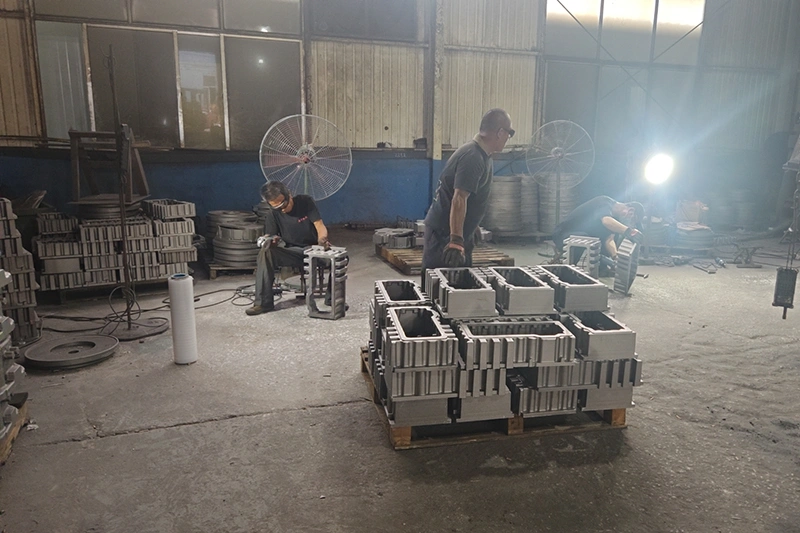
    two men work in a warehouse on sand casting, with a fan providing airflow in the background