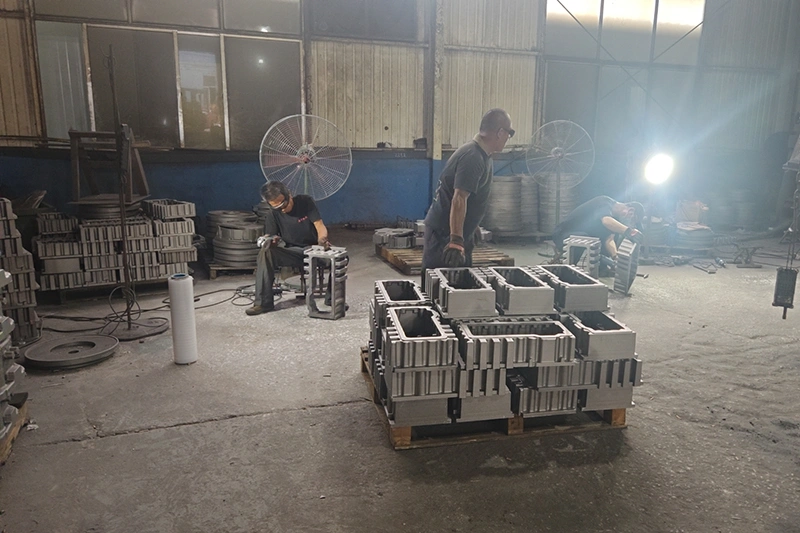
Metal melting sounds intimidating. Temperatures exceeding 1000°F. Glowing liquid that can burn through skin in seconds. Equipment you’ve never used before.
I’ve seen complete beginners successfully melt their first batch of aluminum in a single afternoon. You don’t need expensive gear or years of experience. You need the right metal, proper safety equipment, and a systematic approach.
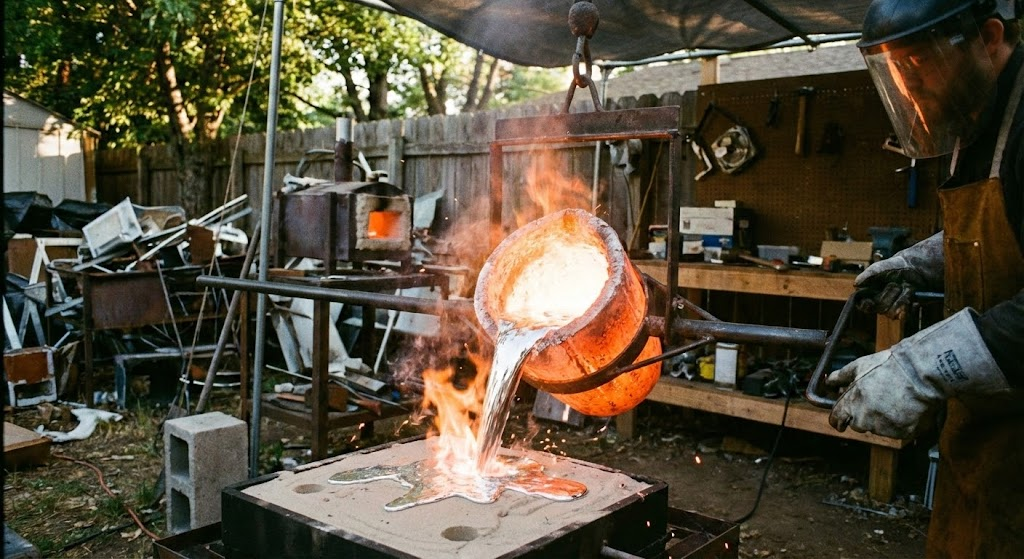
Start with metals that melt below 700°C (1292°F). Lower temperatures mean simpler equipment, faster heating, and a much wider margin for error.
| Metal | Melting Point | Difficulty | Best For |
|---|---|---|---|
| Tin | 232°C / 449°F | Easiest | Practice, small jewelry, figurines |
| Lead | 327°C / 621°F | Easy | Fishing weights, bullets (outdoors only) |
| Zinc | 420°C / 787°F | Moderate | Alloy components |
| Aluminum | 660°C / 1220°F | Moderate | Versatile, widely available as scrap |
| Brass | 930°C / 1710°F | Challenging | Decorative items (requires excellent ventilation) |
Aluminum is my top recommendation for first-timers. Old soda cans, scrap wheels, and broken lawn furniture provide free material. The 660°C melting point sits comfortably within propane furnace range.
Steel and iron require temperatures above 1425°C (2597°F). That’s beyond what most home setups can achieve and demands industrial-grade equipment.
Brass and any zinc-containing metals produce toxic zinc oxide fumes when heated. Inhaling these fumes causes “metal fume fever” – flu-like symptoms that hit 4-8 hours after exposure. Only attempt brass after you’ve mastered safer metals and have professional-grade ventilation.
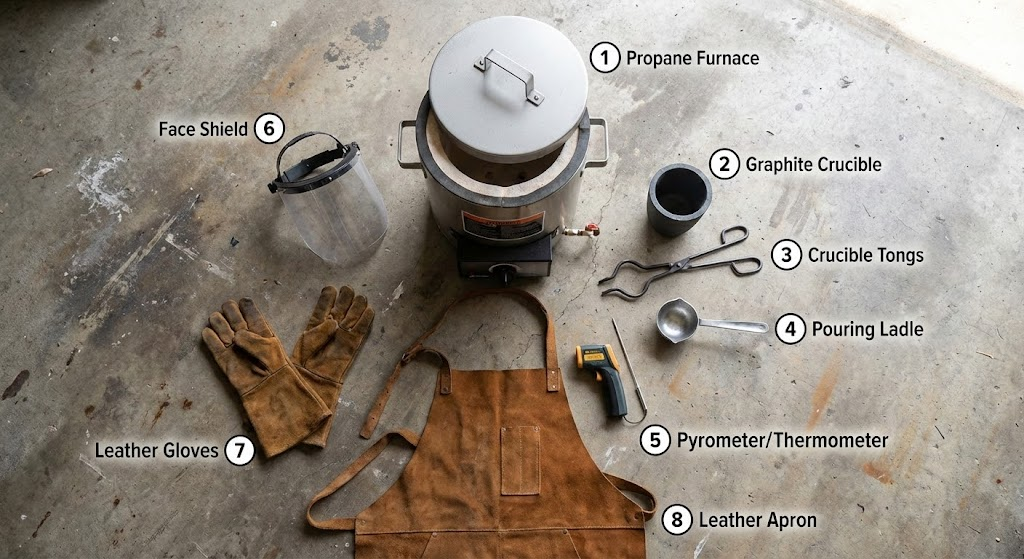
You need four categories of equipment: a heat source, a container for your metal, handling tools, and safety gear. Skip any category and you’re either unable to melt or putting yourself at serious risk.
Metal melting happens in three physical stages: heating to melting point, phase transition from solid to liquid, and superheating above melting point for proper flow. Your process should support each stage.
Set up outdoors or in a well-ventilated space with concrete or dirt flooring. Never work on wood decks or near flammable materials.
Place a Class D fire extinguisher within arm’s reach. Standard ABC extinguishers don’t work on metal fires – they cause explosive reactions with molten metal.
Clear an unobstructed path from your furnace to your pouring area.
Sort your scrap metal and remove any coatings, paint, or contaminants. Painted aluminum releases toxic fumes when heated.
Pre-heat your crucible, tongs, and molds to eliminate moisture and prevent thermal shock. Even a thin film of moisture on a cold tool causes violent steam expansion.
Add flux to aluminum and brass melts. Flux breaks down oxide layers and floats impurities to the surface as slag.
Fire up your furnace and bring it to 50-100°C above your target metal’s melting point. This extra heat compensates for temperature loss during transfer and pouring.
Add metal pieces gradually to the crucible. Dumping large amounts at once drops temperature dramatically. Small, consistent additions maintain stability.
Monitor your pyrometer throughout. For aluminum, aim for 700-750°C. The metal should look mirror-smooth when fully molten.
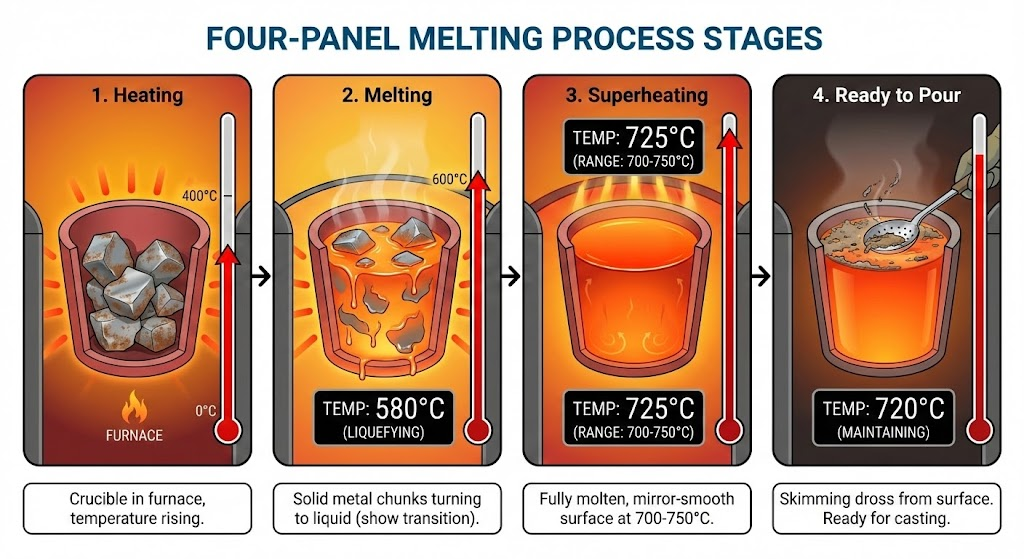
Skim dross and slag from the surface before pouring. These impurities weaken your final casting and create surface defects.
Pour in a steady, controlled stream. Hesitation creates cold shuts where the metal partially solidifies mid-pour. Rushing causes splashing and traps air bubbles.
Allow proper cooling before handling. Aluminum castings need 15-30 minutes minimum.
90% of casting defects trace back to avoidable errors in preparation or technique.
Using wet tools or molds: Causes steam explosions. Every item contacting molten metal must be completely dry and ideally pre-heated.
Wrong crucible for the metal: Graphite works for aluminum but reacts with iron. Research your specific metal’s requirements before buying.
Insufficient furnace temperature: Underheated metal flows poorly and solidifies prematurely. You need 50-100°C above the melting point.
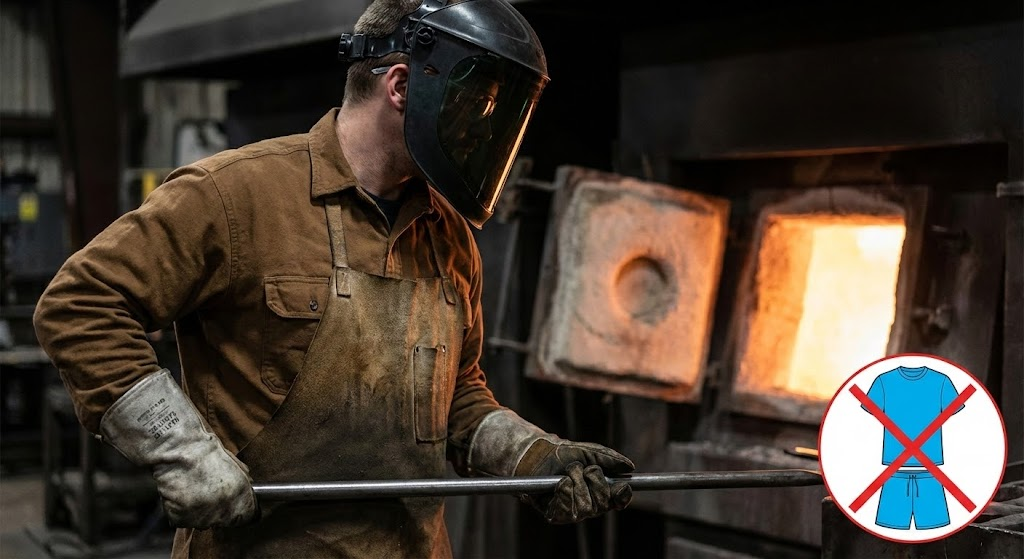
Wearing synthetic clothing: Polyester and nylon melt at low temperatures and bond to skin. A splash on a synthetic shirt causes far worse burns than the same splash on bare skin.
Poor ventilation with zinc-bearing metals: Metal fume fever hits hours after exposure. You won’t feel symptoms while working, making it easy to ignore ventilation until the damage is done.
No Class D fire extinguisher: ABC extinguishers spray water or chemicals that react violently with molten metal. Class D extinguishers use dry powder designed specifically for metal fires.
Metal melting is achievable for beginners who respect the process. Start with aluminum – it’s forgiving, widely available, and melts at temperatures your equipment can easily handle.
Safety isn’t optional. Proper PPE, bone-dry equipment, and good ventilation prevent the injuries that give home foundry work its dangerous reputation.
Gather your equipment, find some clean aluminum scrap, and attempt your first small melt. Most people who try are surprised at how accessible the process actually is. The engine block in your car, the cookware in your kitchen, and countless everyday objects all started as molten metal in someone’s foundry.