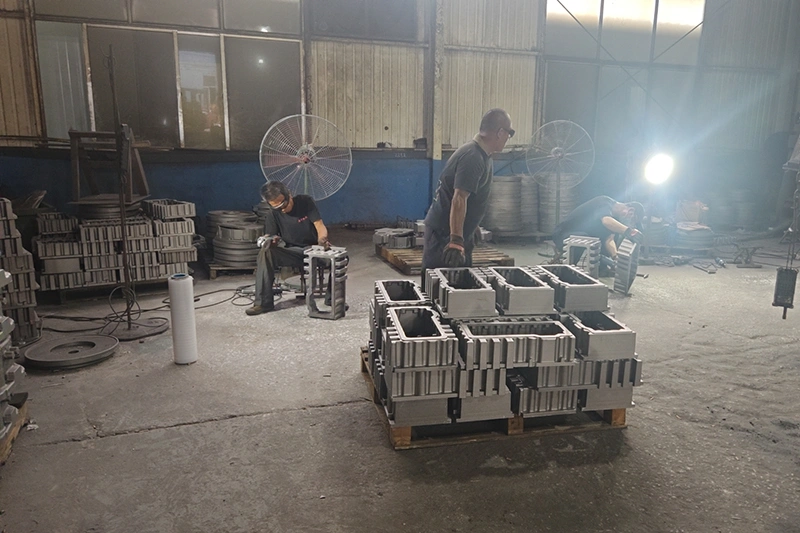
Sixty percent of companies make sourcing decisions based on price instead of total cost of ownership. That single statistic explains why the “30-50% savings” claim for China casting suppliers persists despite evidence that real savings are often half that figure.
From a sourcing perspective, the math gets uncomfortable when you calculate everything. Chinese FOB pricing averages 72% of U.S. pricing, but once you add freight, duties, quality failures, and carrying costs, roughly 25% of imports fall within 20% of domestic costs. For strategic decision-makers evaluating China sand casting suppliers, the question isn’t whether savings exist. It’s whether your specific parts and volumes justify the real total cost difference.
The 30-50% savings claim ignores 15-25% in hidden costs that most buyers never calculate. According to Harry Moser, founder of the Reshoring Initiative, “About 20-30% of imported products would actually be cheaper if you considered all the costs involved, not just the Free on Board price.”
That’s not theoretical. Morey Corp, an Illinois circuit board manufacturer, won a $60 million contract against a Chinese competitor by demonstrating lower total cost of ownership despite higher unit prices. The customer initially favored the Chinese supplier based on piece price alone. When the Reshoring Initiative helped Morey break down all cost factors, the apparent advantage disappeared.
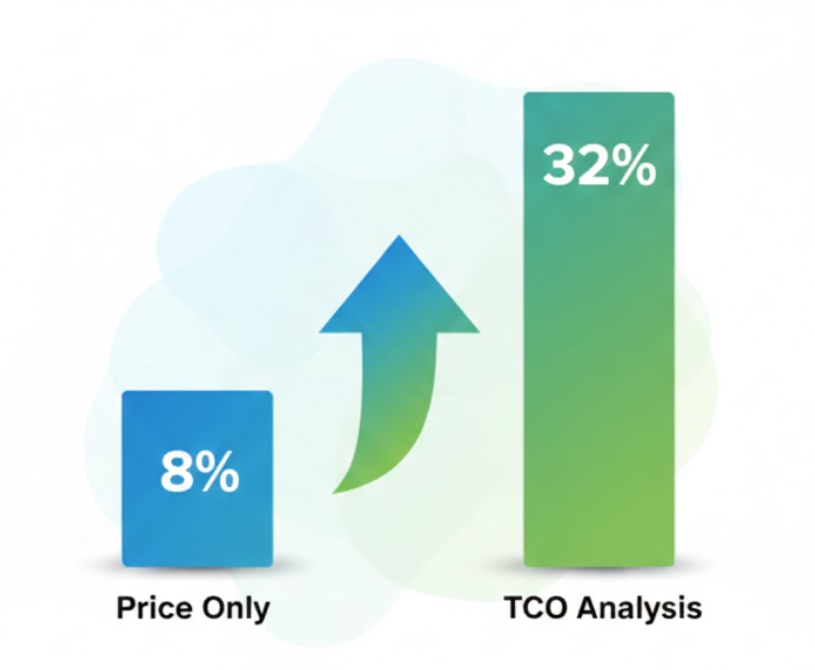
The total cost of ownership includes dozens of factors most quotes ignore. When Morey’s analysis applied TCO methodology, U.S. competitiveness increased from 8% to 32%. That shift represents the gap between what buyers think they’re saving and what they actually save.
For sand castings specifically, the cost factors that drive pricing extend well beyond pattern costs and metal prices. The qualification process should verify whether your projected volumes generate enough savings to offset the overhead.
Hidden costs fall into three categories, and most buyers calculate only the first.
Freight, duties, and packaging are quantifiable but often underestimated. Current U.S. tariffs on Chinese imports run 20% as of March 2025, up from 10%. Ocean freight from China takes 20-40 days versus 2-7 days from Mexico. Every day in transit is working capital tied up in inventory.
Packaging for trans-Pacific shipping costs more than domestic crating. Inspection trips add $5,000-10,000 per visit. These numbers are knowable before you commit.
Quality failures, emergency air freight, and lost sales are harder to predict but often larger. According to ASQ, true quality-related costs reach 15-20% of sales revenue for many manufacturers, with some companies running as high as 40%. More than four in ten manufacturers don’t know their total cost of quality.
The 1-10-100 rule applies here: every dollar spent on prevention saves $10 on inspection and $100 in failure costs. The sourcing agent model carries its own risks. One U.S. home goods company discovered their “factory partner” was actually an agent charging 40% markup. Over three years, they overpaid $2.4 million while the agent quietly switched production to a lower-tier manufacturer to preserve margins.
Communication overhead, customization limitations, and innovation distance are subjective but real. Engineering changes that take days domestically can take weeks through translation, time zone delays, and production schedule conflicts.
ISO 9001 and IATF 16949 certifications are table stakes, not quality guarantees. Quality fade occurs at certified factories.
Paul Midler, founder of China Advantage and author interviewed on Wharton’s Knowledge podcast, describes quality fade as “the deliberate and secret habit of widening profit margins through a reduction in the quality of materials.” The process is gradual. Initial samples meet specifications. With each successive production run, inputs are quietly reduced.
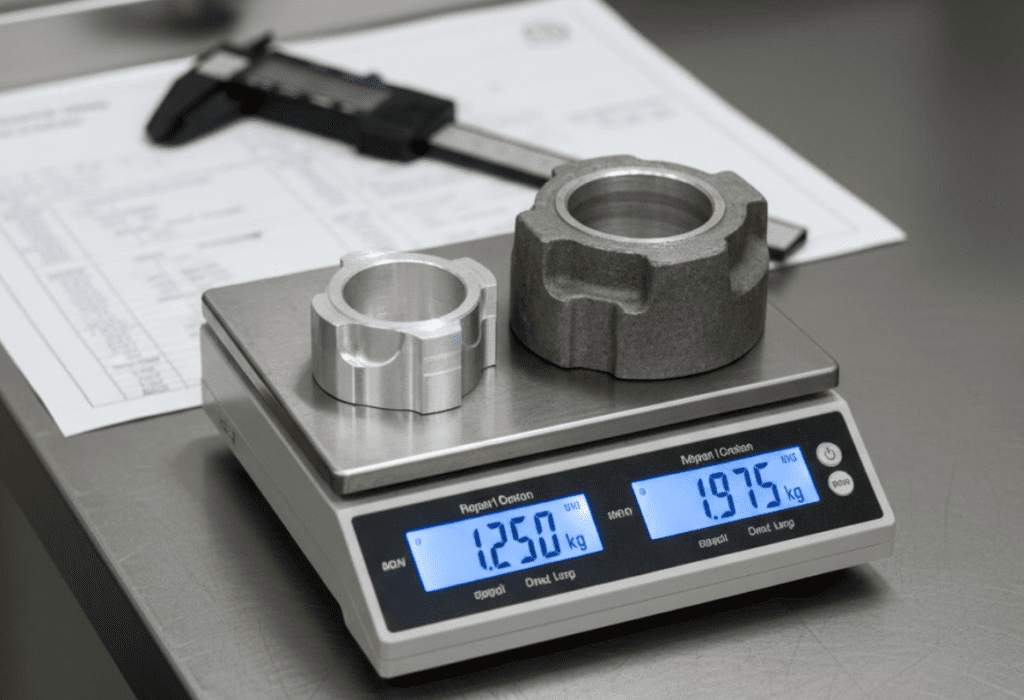
One construction industry case illustrates the risk. An aluminum systems supplier for high-rise commercial buildings made unilateral decisions to reduce specifications without notification. Quality degradation accumulated across multiple runs until one part weighed less than 90% of its specified weight. A structural safety issue discovered too late.
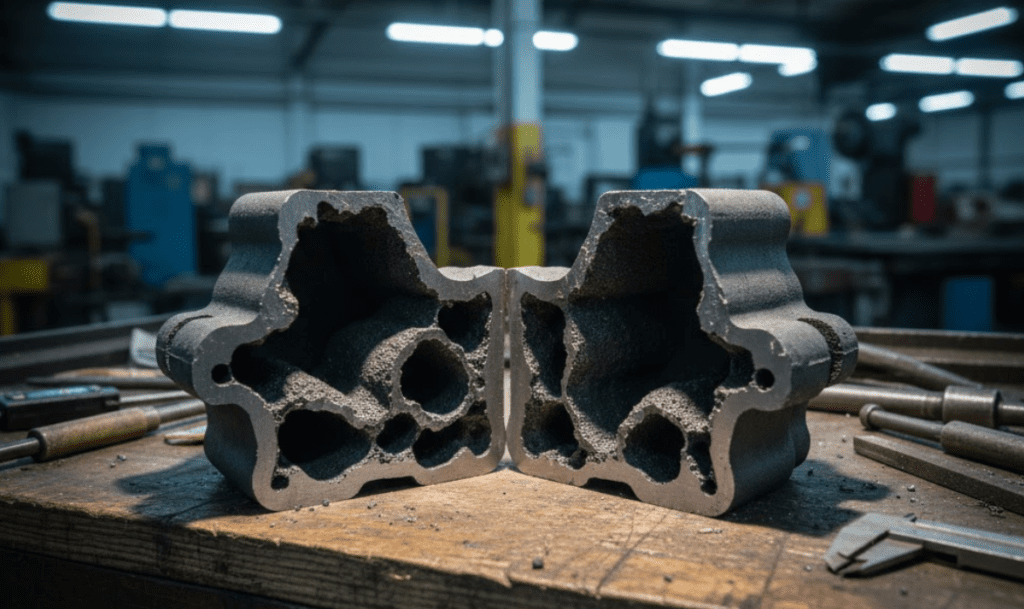
Practitioner experience confirms the pattern. One machinist on a casting forum reported that “50+% of the parts we got in an order were full of porosity.” Another noted that automotive rebuilders “won’t take the China stuff as a core and go to great lengths to obtain OEM cores over new China cast.”
The qualification process should verify beyond paperwork. Request first-article inspection reports with dimensional data. Conduct material testing on production samples, not just prototypes. Define acceptable tolerance ranges in contracts with rejection criteria and consequences.
China sourcing delivers real value under specific conditions. One European OEM achieved 20-25% cost reduction on investment castings by following a structured evaluation process: tooling qualification, sample approval, pilot batch verification, then full production ramp.
The keys were clear specifications, contracted quality metrics, and willingness to walk away from non-compliant suppliers. With stable production planning, 98%+ on-time delivery is achievable.
The right candidates for China sourcing share common characteristics:
For lower volumes, simpler parts, or rapid iteration needs, the math often favors domestic or nearshore options. Mexico now faces tariffs averaging 25% compared to China’s 54-55%. Land transport takes 2-7 days versus 20-40 days by sea. Mexican manufacturing wages run $4.90 per hour compared to China’s $6.50. When companies apply TCO analysis, nearshoring often proves competitive.
The real question isn’t “is China cheaper?” It’s “what’s your true total cost for this specific part at this specific volume?”
Run the TCO calculation before requesting quotes. Include freight, duties, quality costs, carrying costs, and management overhead. If the result shows less than 15% advantage after all factors, domestic or nearshore suppliers likely offer better risk-adjusted returns.
For parts that do justify China sourcing, start with a single part family to build supplier relationships and verification processes before scaling. The European OEM’s success came from treating the first project as a qualification exercise, not a cost-cutting initiative.
Supply chain professionals increasingly recognize this. According to the Reshoring Initiative, 73% of companies report progress on dual-sourcing strategies. The era of defaulting to China based on piece price is ending. The companies winning on total cost are the ones calculating it accurately.