Custom sand casting moves through five distinct stages: design review, tooling, first article production, validation, and production ramp-up. Each stage has specific deliverables, timelines, and decisions that determine whether your project succeeds or stalls. Knowing this workflow before engaging a foundry prevents the costly surprises that drive some buyers to abandon casting altogether.
Most foundry websites list capabilities and materials but say nothing about what actually happens week by week. This article breaks down each stage so you know what to prepare, what to expect, and where projects typically go wrong.
The first stage determines whether your part is castable as designed or needs modifications. A capable foundry reviews your CAD files and specifications to identify potential problems before committing to tooling.
As Randy Brull of Aarrowcast explains, early collaboration creates “a more foundry-friendly casting, which saves us time and energy and cost.” This is not sales talk. Design changes cost almost nothing at this stage but become expensive once tooling exists.
Common design issues flagged during review include features that are too narrow for metal flow, sharp corners that create hot spots, and datum structures based on cores that can shift during casting. Jeff Taylor, a casting engineer at C.A. Lawton, sees this regularly: “Design elements that are too narrow make it hard for the molten metal to flow into them. Rectangular corners should have a radius added to them.”
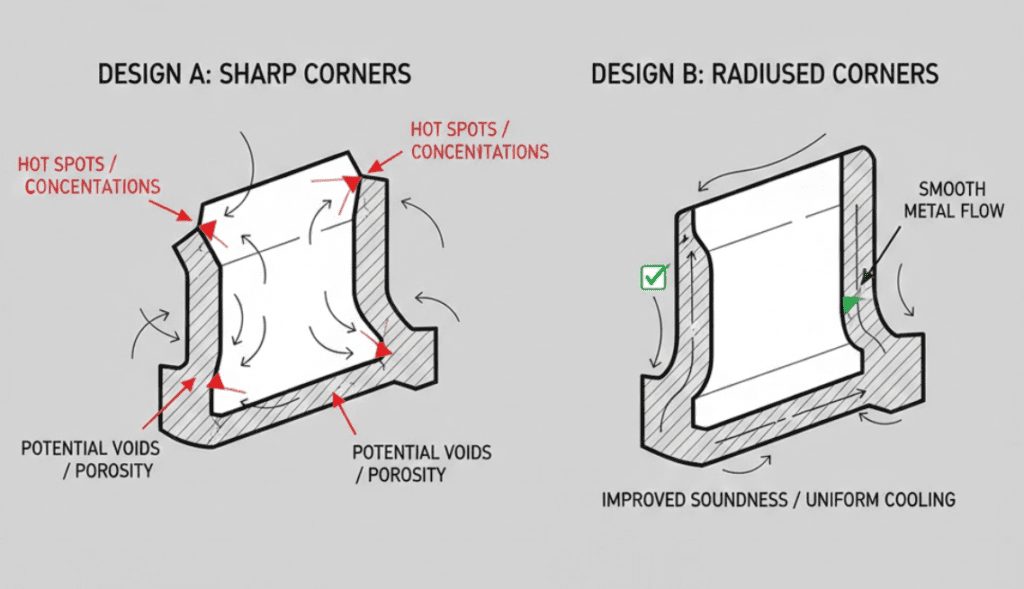
Foundries with strong design-for-manufacturability (DFM) processes catch these problems before they become defects. Thorough DFM review can reduce costs by 20% and compress lead times from 14 weeks to 10 weeks on comparable projects.
What you need at this stage: Complete 3D CAD files, material specification, critical dimensions and tolerances, annual volume estimate, and application requirements. Missing information delays quoting and can lead to incorrect tooling decisions.
Timeline: 1-2 weeks for initial review and DFM feedback.
Tooling represents your largest upfront investment. The pattern creates the mold cavity, and your choice of tooling type affects both initial cost and per-unit economics.
Simple single-piece patterns cost around $1,000. Complex multi-part molds with detailed cavities exceed $5,000 and can reach much higher for large or intricate parts. Typical tooling timelines run about four weeks from design approval.
Three main tooling approaches exist:
Soft tooling (wood, polyurethane modeling board) works well for prototype quantities and moderate production runs. It costs less than hard tooling but requires occasional repair or replacement.
Hard tooling (aluminum, steel patterns) handles high-volume production. Higher initial cost, but durability eliminates replacement concerns for thousands of castings.
3D printed sand molds eliminate traditional tooling entirely. The foundry prints molds directly from CAD data, typically delivering castings within 15 days from file submission.
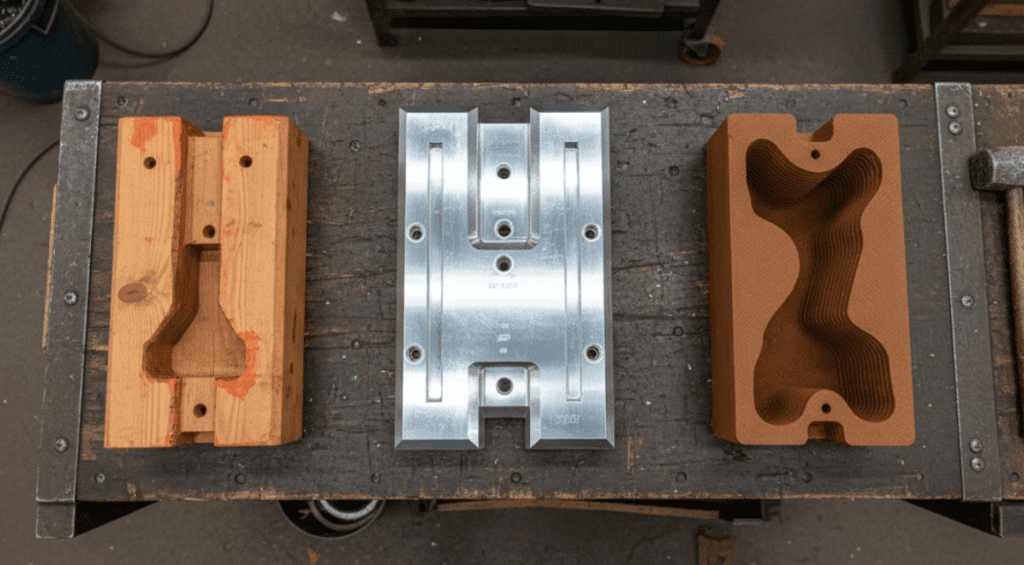
Volume determines the optimal approach. Analysis of prototype tooling economics found the crossover point at approximately 22 castings. Below 22 parts, 3D printed sand molds cost less per casting. Above 22 parts, investing in soft tooling pays off.
For projects requiring 1-10 parts, 3D printing usually wins. For 1,500+ parts, traditional production tooling makes sense despite the upfront investment.
The Vectrix electric scooter swingarm project demonstrates what is achievable. Using loose tooling instead of matchplate patterns reduced lead times by 40%, delivering castings in under three weeks total.
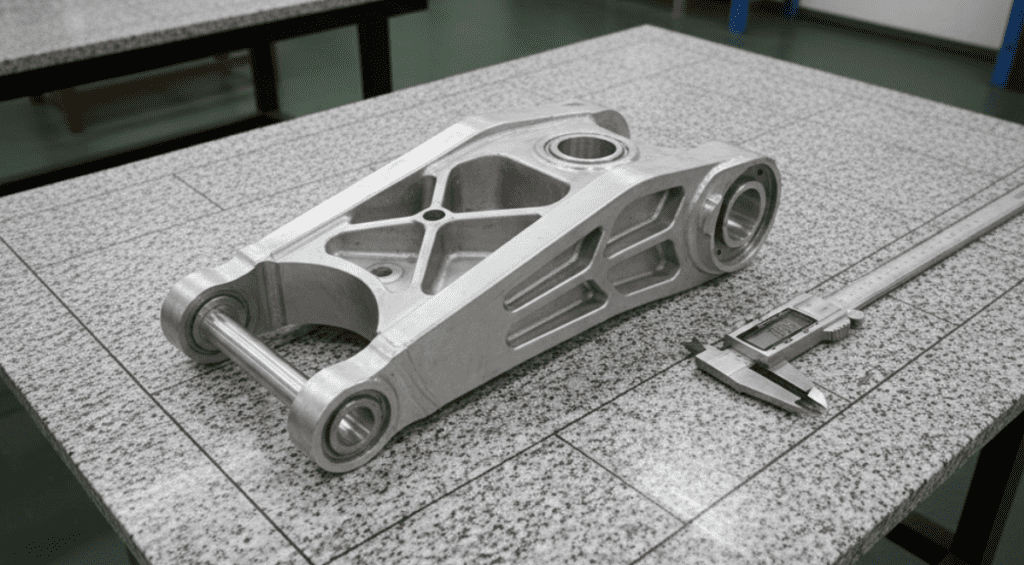
What you need at this stage: Final approved design, volume commitment or estimate, and timeline requirements. Tooling investment is difficult to recover, so volume projections matter.
Timeline: 2-4 weeks depending on complexity and tooling type selected.
With tooling complete, the foundry produces sample castings for your evaluation. This stage reveals whether the design, tooling, and process work together.
First sample castings often have some problems. This is normal, not a failure. The complexity of sand casting means that solidification patterns, metal flow, and cooling rates interact in ways that simulation cannot fully predict. James Bohlen of Allison Transmission notes that “solidification models tell the foundry if they need to add a filter or riser… they need to understand what they have to do before they make it.” But even good simulation requires real-world validation.
Simple castings typically reach sample stage within 2-3 weeks after tooling completion. Complex multi-core castings take 4-6 weeks on average. 3D printed sand molds compress this timeline sharply, with some foundries achieving 5 working day mold turnaround for complex impeller geometries.
What to expect: The foundry produces a small quantity (typically 3-10 pieces) for dimensional inspection and, if required, destructive testing. You receive inspection reports documenting conformance to specifications.
What you need at this stage: Clear acceptance criteria, inspection priorities, and quick turnaround on sample evaluation. Delays in your feedback directly extend project timelines.
Timeline: 2-6 weeks depending on part complexity.
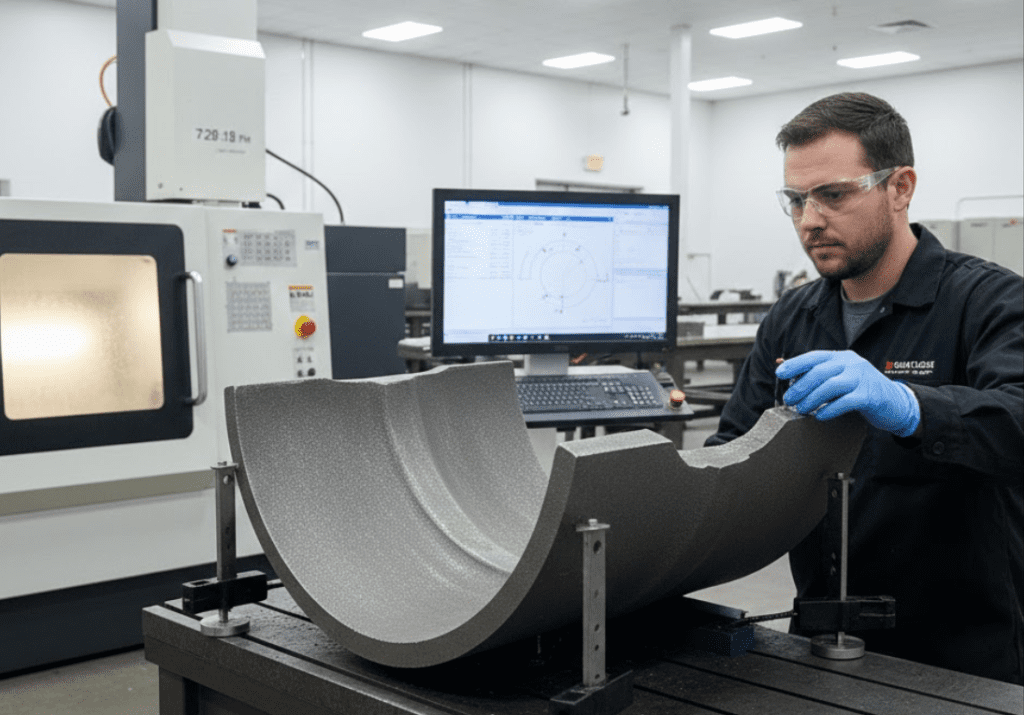
First article inspection (FAI) formally documents whether castings meet all specified requirements. For automotive and aerospace applications, Production Part Approval Process (PPAP) adds additional documentation layers.
Standard validation includes dimensional inspection against drawing specifications. Sand casting achieves as-cast tolerances of +/-1.5-3 mm, with CNC machining bringing critical dimensions to +/-0.01 mm. Surface finish typically ranges from 250-900 microinch Ra as-cast.
Material certification verifies alloy composition. Mechanical testing confirms tensile strength and elongation meet specification. Some applications require x-ray or dye penetrant inspection for internal or surface defects.
Advanced foundries can now produce prototypes with mechanical properties matching production parts. Traditional prototype methods often produced parts with different internal structures than production, making test results less predictive. Digital simulation combined with intelligent tooling and cooling control eliminates this gap.
As Bob Mueller of Komatsu observes, “If you deliver a part on time but it’s no good, now the foundry is behind by one part… Both quality and delivery suffer when workmanship goes to the side.” Quality problems at validation stage cascade into schedule problems throughout production.
What you need at this stage: Complete inspection requirements, test specifications, and approval authority to sign off on samples. Define acceptance criteria before samples arrive, not after.
Timeline: 1-3 weeks including your review and approval time.
Approved samples trigger production release. The transition from prototype to production quantities changes the economics substantially.
Tooling cost amortizes across production volume. A $5,000 tooling investment adds $5 per unit at 1,000 pieces but only $0.50 per unit at 10,000 pieces. This is why low-volume and high-volume projects require different approaches to the entire prototype-to-production journey.
Typical sand casting process steps achieve 3-5 week turnaround for production orders once the process is validated. Expedited timelines are possible, though expect a 15% premium for cutting standard four-week lead times to two weeks.
Production scheduling depends on foundry capacity, and capacity constraints are real. Some buyers have found foundries increasingly stretched as manufacturing activity fluctuates. Building supplier relationships before urgent needs arise provides scheduling flexibility that spot-buying cannot match.
What you need at this stage: Blanket order or release schedule, quality requirements for ongoing production, and communication protocol for any process changes.
Timeline: 3-5 weeks per production batch, ongoing.
Before approaching a foundry, prepare:
Design documentation
Project requirements
Decision authority
Having this information ready at initial contact accelerates quoting, reduces back-and-forth, and demonstrates you are a prepared buyer that foundries want to work with.