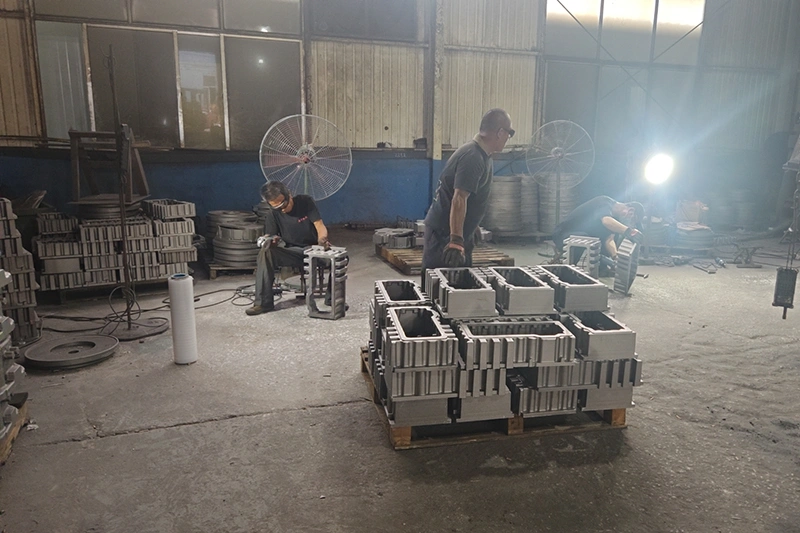
Why do wear-resistant parts account for over 50% of agricultural machinery breakdowns? According to a 2023 peer-reviewed study published in MDPI’s Materials journal, the failure of critical wear-resistant components is the single largest cause of rural machinery downtime. Combine harvesters operate trouble-free for only 20 to 30 hours before something needs attention.
The casting process and material you choose directly control how long those parts last. Sand casting remains the dominant manufacturing method for agricultural components, and for good reasons — but the material grade you specify matters far more than most procurement teams realize. This guide covers why sand casting fits agricultural applications, what the operating environment demands, how to select the right material, and what to specify when placing an order.
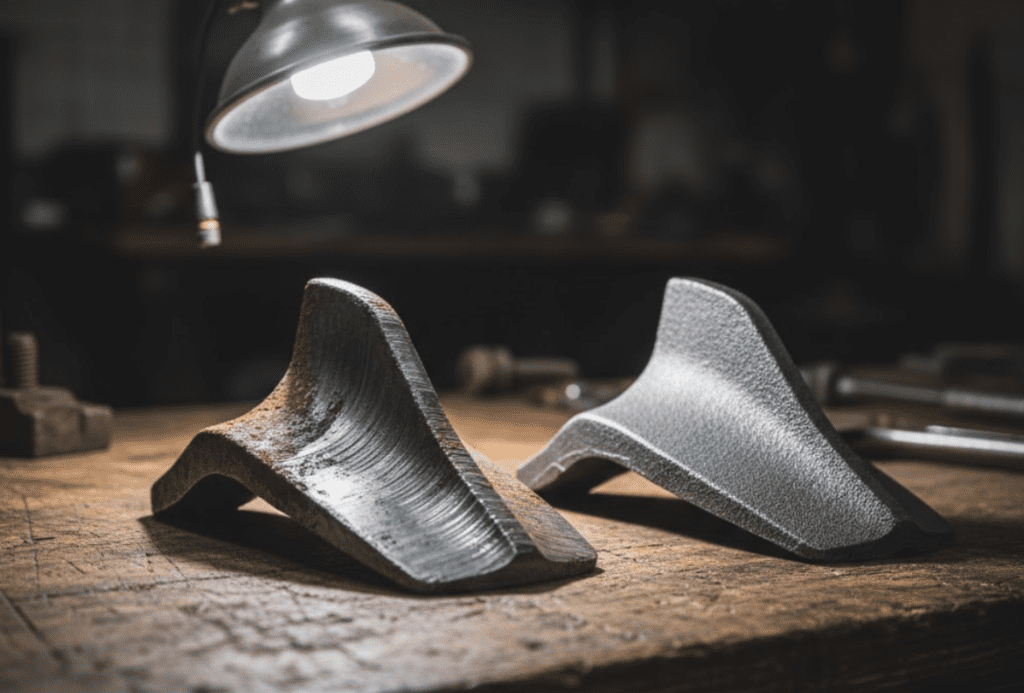
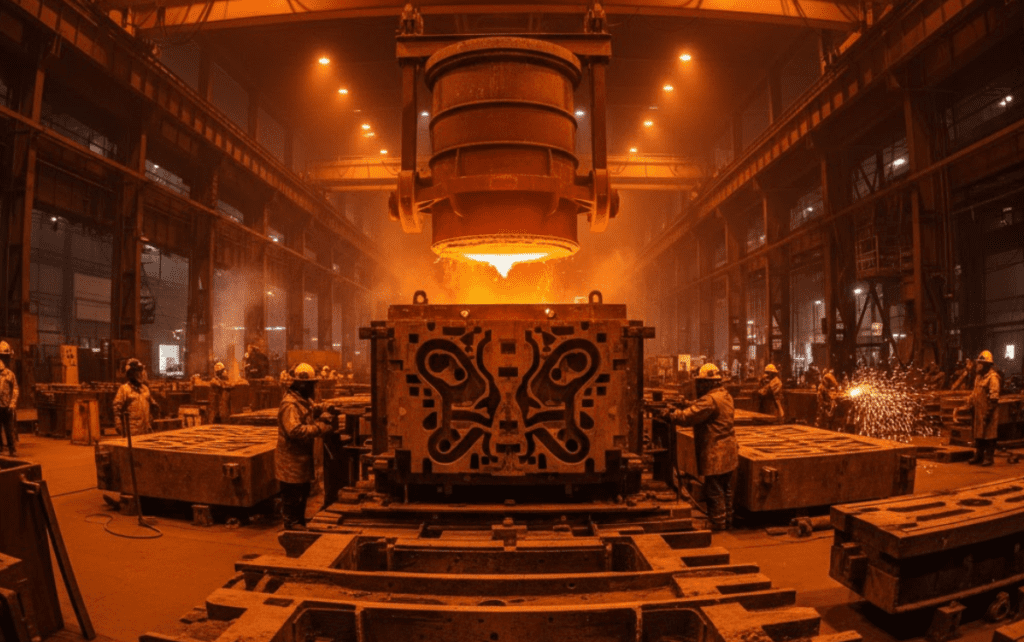
Sand casting produces over 70% of all metal castings worldwide, and agricultural equipment manufacturing relies on it more than any other casting method.
Three characteristics make sand casting the natural fit for agricultural components. First, part size flexibility. Agricultural parts range from small brackets under a kilogram to large housings and counterweights exceeding several hundred kilograms. Sand casting handles this entire range without retooling. Second, low tooling costs compared to die casting or investment casting. Agricultural OEMs often produce moderate volumes — thousands per year rather than millions — where sand casting’s pattern costs deliver the best per-part economics. Third, material versatility. Sand casting works with gray iron, ductile iron, cast steel, and specialty alloys like austempered ductile iron, giving engineers full freedom to match the material to the application.
From a sourcing perspective, sand casting’s volume flexibility is its most undervalued advantage for agricultural OEMs. Seasonal demand swings are normal in this industry. A process that scales from 50-piece prototype runs to 5,000-piece production batches without scrapping tooling saves more over a product lifecycle than any unit-price negotiation.
Waupaca Foundry demonstrated this value when they worked with the world’s largest agricultural equipment manufacturer to replace a 66-pound multi-part steel weldment with a single ductile iron casting. That switch delivered 10% weight reduction, simplified assembly, and lower manufacturing costs — all from changing the process, not just the material.
Agricultural machinery components face a uniquely aggressive combination of degradation mechanisms. Unlike factory equipment operating in controlled conditions, agricultural parts endure abrasive soils, moisture, chemical exposure from fertilizers and pesticides, temperature cycling between seasons, and repeated shock loads from rocks and uneven terrain. These mechanisms rarely occur in isolation. A plow blade simultaneously faces abrasive wear from soil particles, corrosive attack from moisture and chemicals, and impact loading from buried rocks.
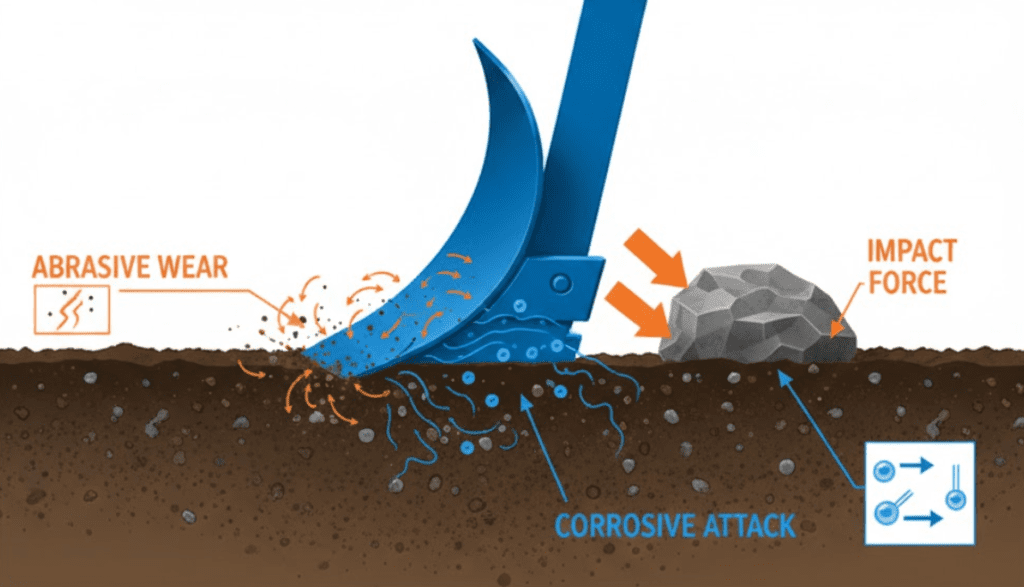
Soil friction resistance alone accounts for 20 to 30% of total tillage resistance, according to the same MDPI research. The hardness, shape, and size of soil particles vary widely by region and season, making wear patterns unpredictable.
The same MDPI study tracked agricultural machinery failures across multiple equipment types and found clear root cause patterns: poor field conditions caused 30% of failures, ignored maintenance 22%, intensive use 21%, improper storage 14%, and unskilled operators 13%. Material selection addresses the first and third categories directly — components that resist abrasion and impact under intensive use in harsh field conditions simply last longer.
Specifying the right material for the specific operating environment is not optional. Generic “cast iron” on a purchase order is not enough. The loading type — compressive, tensile, impact, or abrasive — determines which alloy grade will actually survive in the field.
No single material works for every agricultural casting. The right choice depends on loading type, failure consequences, and cost constraints. Here is how the three main material families compare for agricultural applications.
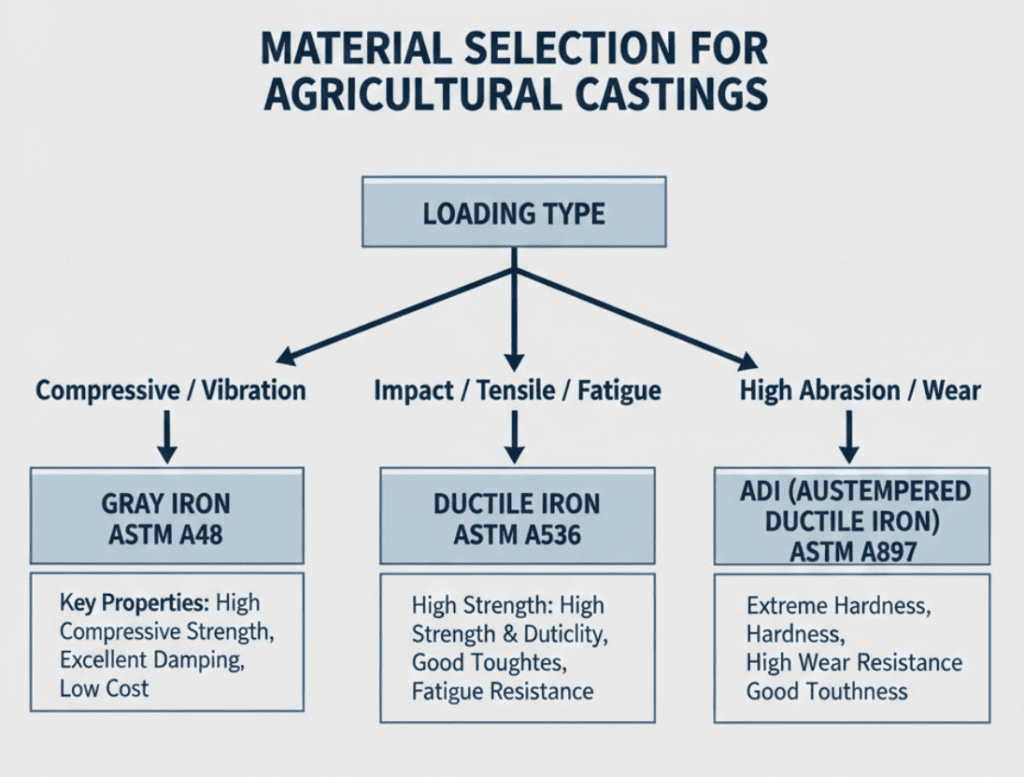
Gray iron (ASTM A48) excels where compressive loading and vibration damping matter most. Its damping capacity is seven times that of ductile iron — a ratio of 1.0 versus 0.14. This makes gray iron irreplaceable for gearbox housings, engine blocks, and pump bodies where vibration absorption prevents fatigue cracking in adjacent components.
ASTM A48 Class 30 delivers 30 ksi (207 MPa) tensile strength at 187-241 BHN hardness. Class 40 reaches 40 ksi (276 MPa) for higher-load structural applications. Gray iron’s compressive strength runs three to four times its tensile strength — 500 to 1,400 MPa — which is why it handles static loads so well despite lower tensile numbers.
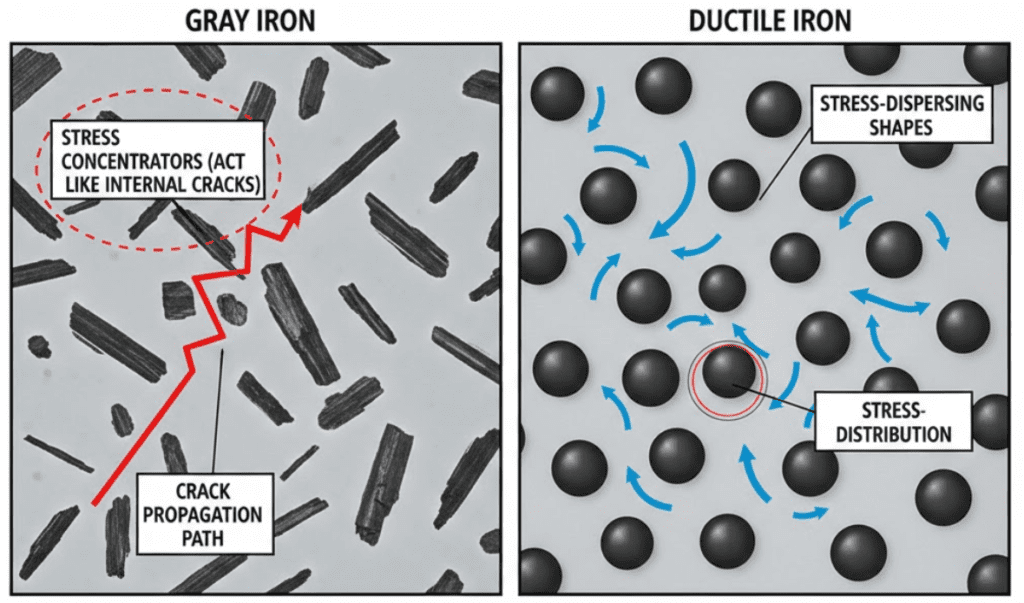
Gray iron also costs 15 to 25% less than ductile iron depending on part complexity. For housings, brackets, and covers that primarily see compressive and vibrational loading, it is the cost-effective choice. But never specify gray iron for impact-loaded components. The flake-shaped graphite in its microstructure acts like tiny internal cracks, making the material brittle under sudden shock loads.
Ductile iron (ASTM A536) is the default choice for any agricultural component facing impact, tensile, or fatigue loading. Its spheroidal graphite nodules eliminate the internal stress concentrators that make gray iron brittle, delivering three times the tensile strength and 3.5 times the impact resistance of basic gray iron.
ASTM A536 Grade 65-45-12 — the workhorse of the ductile iron family — delivers 65 ksi tensile strength, 45 ksi yield strength, 12% elongation, and 170-207 BHN hardness. These properties are comparable to mild steel at a much lower cost. For higher-stress applications, Grade 80-55-06 reaches 80 ksi tensile with 55 ksi yield strength while maintaining adequate ductility.
I recommend Grade 65-45-12 as the starting specification for most agricultural load-bearing castings: drawbar brackets, wheel hubs, linkage arms, and structural frames. It provides the best balance of strength, ductility, and machinability. Only step up to Grade 80-55-06 when stress analysis confirms the need.
Austempered ductile iron (ADI, ASTM A897) is the material most agricultural procurement teams have never evaluated — and they should. ADI delivers steel-level strength at 10% less weight and with superior wear resistance, because its ausferrite microstructure self-hardens during use. Under abrasive contact, the high-carbon austenite in the surface layer transforms to martensite, creating harder wear-resistant regions exactly where they are needed.
According to research published in the Journal of Materials Engineering and Performance, ADI’s wear rate is approximately half that of hardened medium-carbon AISI 1050 steel. ASTM A897 Grade 1 (110/70/11) delivers 110 ksi tensile strength, 70 ksi yield, 11% elongation, and 80 ft-lbs impact energy at 241-302 BHN. Grade 3 (150/110/07) pushes to 150 ksi tensile at 302-375 BHN for extreme wear applications.
John Deere uses ADI in tillage tool discs for exactly this reason. According to SLF Castings, which supplies ADI components for agricultural equipment, “They’re hitting rocks and plowing through abrasive soil. ADI lasts much longer in that environment.” For ground-engaging components — plowshares, tillage discs, cultivator points — ADI’s cost premium over conventional ductile iron pays for itself in reduced replacement frequency.
Specification precision determines casting quality. Vague requirements produce vague results. When ordering sand castings for agricultural equipment, specify these parameters explicitly.
Material grade, not material family. Write “ASTM A536 Grade 65-45-12” on the purchase order, not “ductile iron.” The grade defines minimum mechanical properties that the foundry must verify through testing. Generic material callouts leave critical properties to the foundry’s discretion.
Dimensional requirements. Standard sand casting tolerances run plus or minus 1 mm, with an additional plus or minus 1 mm across parting lines. Minimum wall thickness is typically 6 mm (0.25 inches). Standard draft angles start at 2 degrees. Specify tighter tolerances only on critical surfaces that will be machined after casting — over-tolerancing the entire part drives cost up without improving function.
Testing and documentation. Require material test reports showing tensile strength, yield strength, elongation, and hardness for each heat. For safety-critical components like structural frames or lifting points, add impact testing requirements. These reports cost little but provide traceability if a field failure occurs.
The total cost of ownership for an agricultural casting includes not just the unit price, but also replacement frequency, downtime during harvest, and field serviceability. A ductile iron casting that costs 20% more than gray iron but lasts three seasons instead of one is the better investment. Always evaluate casting cost in the context of the machine’s operating lifecycle.
Most specification failures happen before the foundry pours a single casting. Engineers who write “ductile iron” instead of “ASTM A536 Grade 65-45-12” hand the material decision to someone who has never seen their equipment operate in the field. Start with the loading type — compressive, impact, or abrasive — and let that narrow the material choice. Then request test reports that prove the foundry hit the grade requirements, not just the alloy family.