Casting sand is a specially prepared mixture that holds its shape when packed around an object, allowing you to create molds for metal casting projects. You can make professional-quality casting sand at home with just a few simple ingredients that cost less than $20 total.
Making your own casting sand saves you hundreds of dollars compared to buying commercial products. Plus, you can customize the mixture to work perfectly with whatever metals you’re casting, from aluminum to brass.
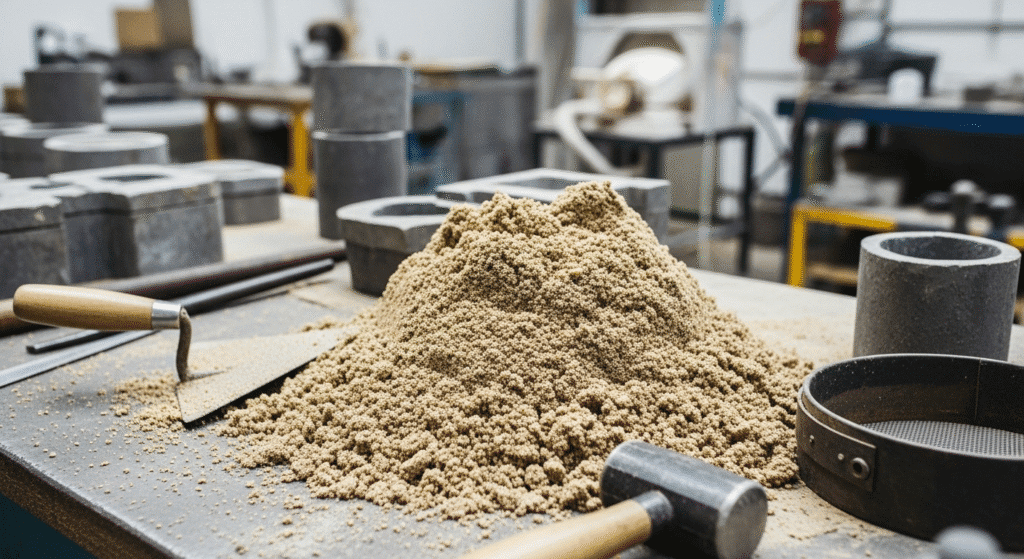
The best casting sand needs three key properties: it must stick together when compressed, release cleanly from your pattern, and withstand the heat of molten metal. Think of it like making the perfect sandcastle – too dry and it crumbles, too wet and it sticks to everything.
Regular beach sand won’t work because the grains are too coarse and rounded. You need fine sand with angular edges that lock together when compressed.
The secret ingredient that transforms ordinary sand into casting sand is bentonite clay. This special clay acts like microscopic glue when mixed with water, binding the sand grains together without making the mixture sticky.
Green sand (called “green” because it’s used while damp, not because of its color) is the easiest and most versatile casting sand to make at home. Here’s what you’ll need:
The ratio is simple: use about 10% clay to 90% sand by weight. For smaller batches, that’s 10 pounds of clay for every 90 pounds of sand.
Start by sifting your sand through a window screen to remove any large particles or debris. Fine, uniform sand creates smoother mold surfaces and better detail reproduction.
Pour your sand into the mixing container first. Add the bentonite clay on top and mix thoroughly with your hands or a garden trowel for at least 5 minutes.
The clay needs to coat every grain of sand evenly. If you see clumps of clay, keep mixing – uneven distribution will create weak spots in your molds.
This is the trickiest part – you need just enough water to activate the clay without making soup. Start by spraying a light mist over the mixture while stirring continuously.
Add water until the sand barely holds together when you squeeze a handful. It should feel like slightly damp beach sand, not wet or muddy.
Grab a handful and squeeze it firmly. When you open your hand, the sand should hold its shape perfectly without crumbling or sticking to your palm.
Break the clump in half – it should snap cleanly rather than crumble or squish. If it crumbles, add more water. If it’s sticky, add more dry sand.
Cover your mixture and let it sit overnight. This “tempering” period allows the water to distribute evenly and the clay to fully activate, creating stronger bonds between particles.
For reusable molds that don’t need water, mix 100 pounds of fine sand with 1 gallon of motor oil and 5 pounds of bentone clay. This mixture won’t dry out and can be used hundreds of times.
For extremely detailed work, mix sand with liquid sodium silicate (water glass) instead of clay. Add 3-5% sodium silicate by weight, then harden the mold with CO2 gas for an incredibly strong, precise mold.
Beach sand typically won’t work because it’s too coarse and has rounded grains that don’t lock together well. You need fine, angular sand specifically sold as silica sand or casting sand.
Properly stored casting sand can last for years. Green sand needs occasional water refreshing, while oil-bonded sand remains usable almost indefinitely with minimal maintenance.
Homemade casting sand works well for aluminum, brass, bronze, and pewter. Iron and steel require special high-temperature sands with additional additives to withstand the extreme heat.
A 50-pound batch is perfect for hobbyists doing small castings. This amount fills a 5-gallon bucket and provides enough material for dozens of small molds.
Yes, casting sand is highly reusable. Simply break up the old mold, remove any metal bits, add a little water if needed, and remix before your next project.