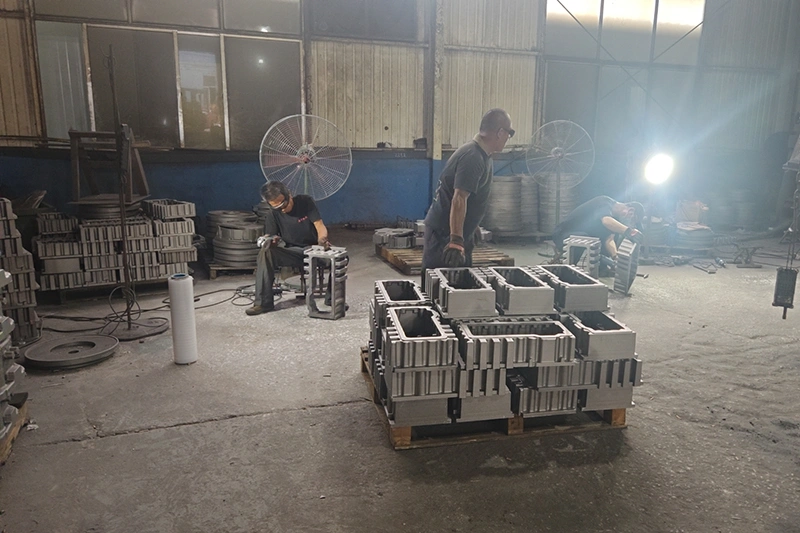
Less than a century ago, cast iron foundries serving small orders existed in every major city. Today, they are much harder to find. This market shift leaves buyers uncertain about minimum order quantities when sourcing sand castings.
Sand casting offers much lower MOQ than die casting, but “low” means different things to different foundries. Some job shops accept single-piece orders. Production foundries may require 500 pieces minimum. From a sourcing perspective, the economics behind these requirements determine where you should shop and what you can negotiate.
Foundries set minimum order quantities to protect production efficiency and margins. Two factors dominate: setup costs and pattern economics.
Every new casting job requires machine configuration, labor scheduling, and material preparation. These fixed costs remain constant whether you order 10 pieces or 1,000. Larger production runs spread these expenses across more units, improving per-piece economics for both foundry and buyer.
A small order ties up the same production capacity as a large one during setup. This opportunity cost pushes foundries toward customers whose volumes justify the disruption.
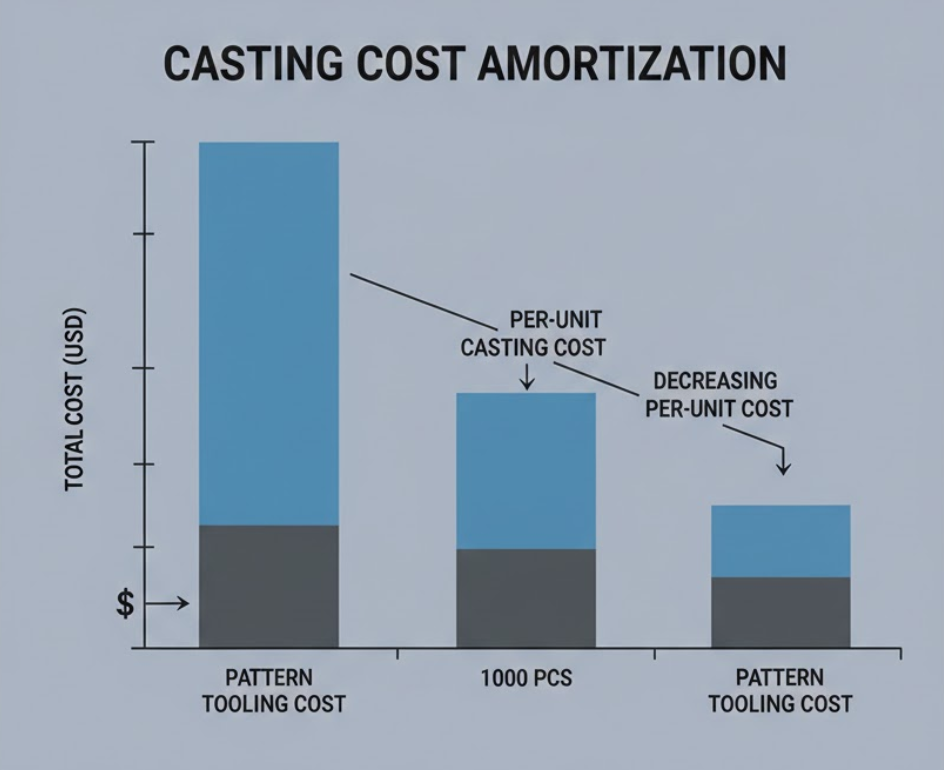
Tooling costs often exceed the casting costs themselves on small orders. Consider a $5,000 pattern investment:
| Order Size | Per-Unit Pattern Cost |
|---|---|
| 100 units | $50.00 |
| 1,000 units | $5.00 |
| 10,000 units | $0.50 |
At 100 pieces, tooling adds $50 to each casting. At 10,000 pieces, that drops to $0.50. This explains why foundries prefer larger orders. Get familiar with sand casting cost factors before requesting quotes – tooling economics shape every MOQ conversation.
Here are actual MOQ ranges based on order type and foundry capability.
Specialized job shops routinely handle single-piece to 25-piece orders. State Line Foundries reports their average order quantity is approximately 10 pieces, processing 250+ new part numbers annually through sample runs.
For prototypes, 3D-printed sand molds eliminate pattern making entirely. This allows one-off production with lead times measured in days rather than weeks. The tradeoff: higher per-piece cost, which becomes economical below roughly 100 units.
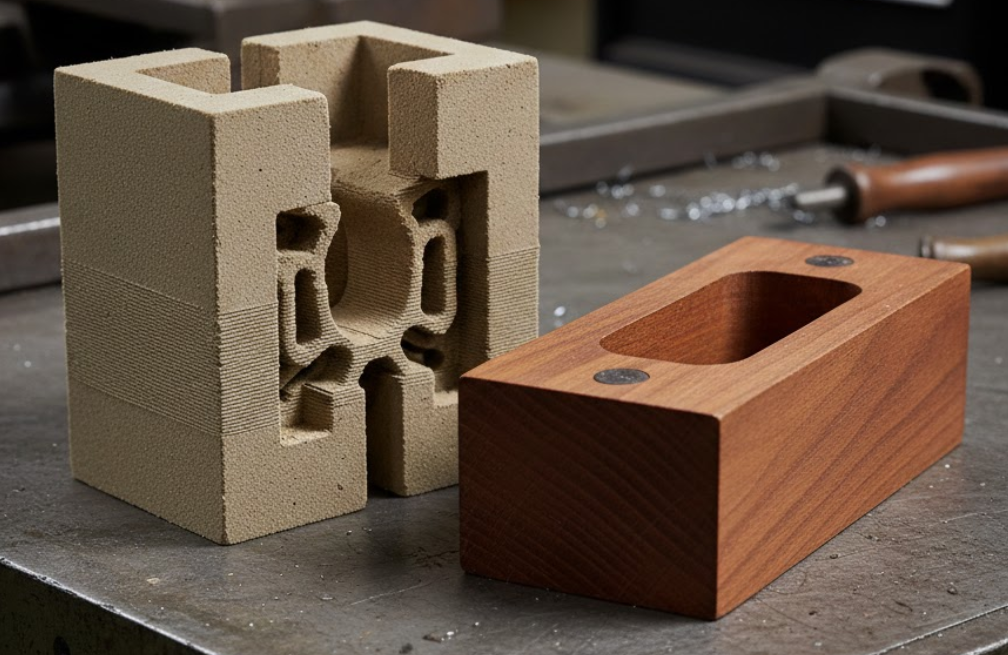
The 25-500 piece range represents the core of low-volume sand casting. Traditional patterns become economically viable around 100 pieces, where the per-unit tooling burden drops to acceptable levels.
Job shops specialize in this range. Production foundries typically avoid it, as their automated lines require higher volumes to operate efficiently. Finding the right foundry type beats negotiating with the wrong one.
Above 500 pieces, most domestic foundries compete for your business. At this volume, tooling amortization becomes negligible and per-piece pricing improves.
Sand casting remains cost-effective for estimated annual usage between 5 and 2,000 units. Beyond 2,000-5,000 pieces per year, die casting becomes competitive on per-piece cost, though the $7,500-$75,000 die tooling investment requires careful payback analysis.
The difference between foundry types affects MOQ more than any other factor. Sourcing a low-volume part at a high-volume foundry increases costs because their entire manufacturing process is designed around larger lot sizes.
Job shop foundries handle high variety, low volume. They reset machines between jobs, accepting the inefficiency in exchange for flexibility. Single-piece orders are common. Lead times are typically shorter for small batches.
Production foundries optimize for repetition. Their automated lines, larger furnaces, and specialized handling reduce per-piece costs at volume but create overhead that makes small orders unprofitable. MOQ requirements of 500-1,000 pieces reflect this structure.
When evaluating foundries, ask directly about their optimal order size range. Foundries operating outside their sweet spot will either quote high prices (to discourage the order) or deliver reluctant service. Neither outcome serves your project.
Geographic sourcing creates predictable MOQ patterns worth understanding before you request quotes.
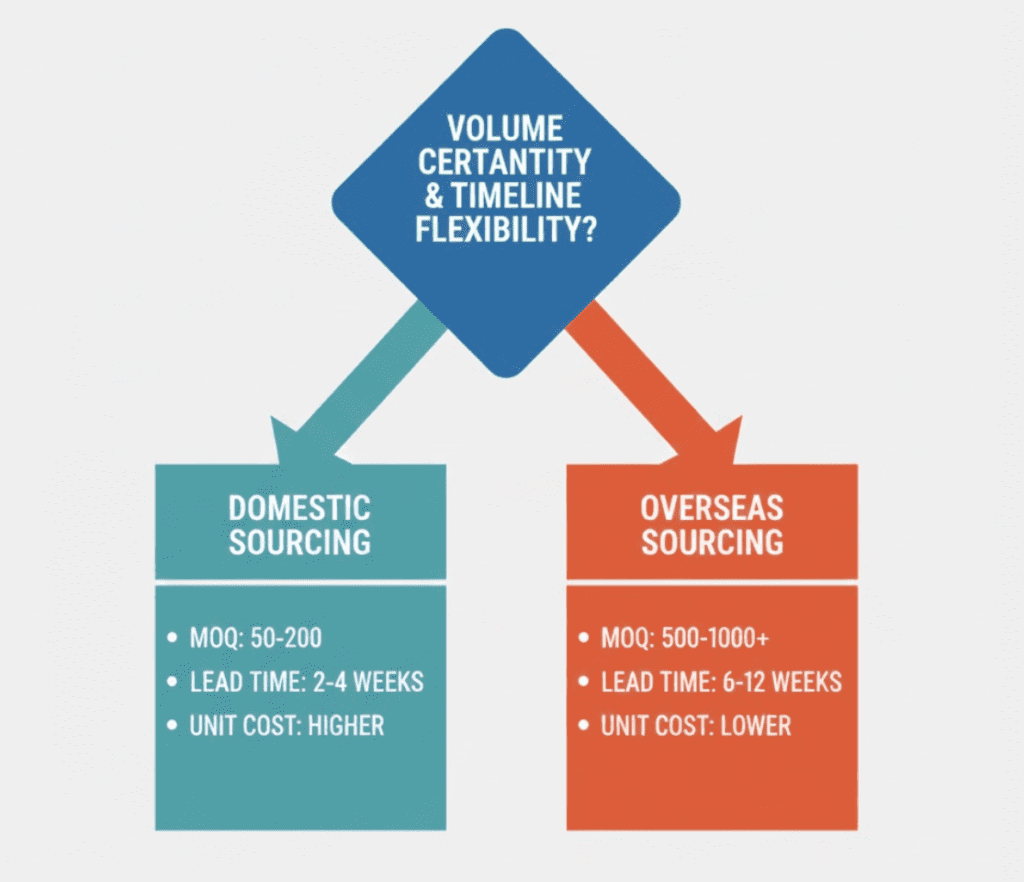
Domestic (US/EU) foundries typically accept 50-200 piece minimums. Higher labor costs push per-piece pricing up, but shorter lead times (2-4 weeks), easier communication, and simpler logistics often offset the premium. For iterative development or time-sensitive production, domestic sourcing reduces total project risk.
China foundries commonly require 500-1,000+ piece minimums. Lower per-unit costs attract volume buyers, but 6-12 week production timelines (plus shipping) and communication complexity add hidden costs. The total cost of ownership includes shipping, duties, quality verification, and the carrying cost of larger inventory commitments.
From a sourcing perspective, the decision depends on your volume certainty and timeline flexibility. Stable, predictable demand above 500 units per order favors overseas sourcing. Variable demand or prototype-to-production transitions favor domestic suppliers.
Several strategies help buyers work within foundry MOQ policies without forcing a poor fit.
Commit to annual volume, take delivery in smaller batches. A 1,000-piece blanket order with quarterly 250-piece releases gives the foundry volume certainty while reducing your inventory burden. Many foundries prefer this arrangement to sporadic smaller orders.
Once you pay for patterns, you own them and may relocate them to another foundry. This ownership gives you leverage: if a foundry’s MOQ requirements no longer fit your needs, you can take your tooling elsewhere.
Some buyers invest in durable patterns (metal vs wood) specifically to maintain this flexibility. The higher upfront cost pays back through supplier optionality over the tooling’s 50,000-100,000 unit lifespan.
High MOQ requirements from a job shop signal the wrong foundry type. Production foundries quoting reluctantly on small volumes will deliver reluctant quality.
Red flags include: MOQ well above industry norms for your order type, unwillingness to discuss blanket orders, and resistance to providing references for similar-volume customers. These signals indicate a fundamental volume mismatch that negotiation cannot fix.
Match your volume to foundry specialization first, negotiate second. A job shop averaging 10-piece orders will serve your 50-piece prototype better than a production foundry requiring 500 pieces minimum, regardless of quoted price.
Ask potential suppliers about their typical order size, not just their minimum. The foundries operating within their optimal range deliver better quality, pricing, and responsiveness than those stretching to accommodate mismatched volumes. For the broader sourcing process, the OEM guide to sand casting covers what comes next after you have identified the right foundry type.