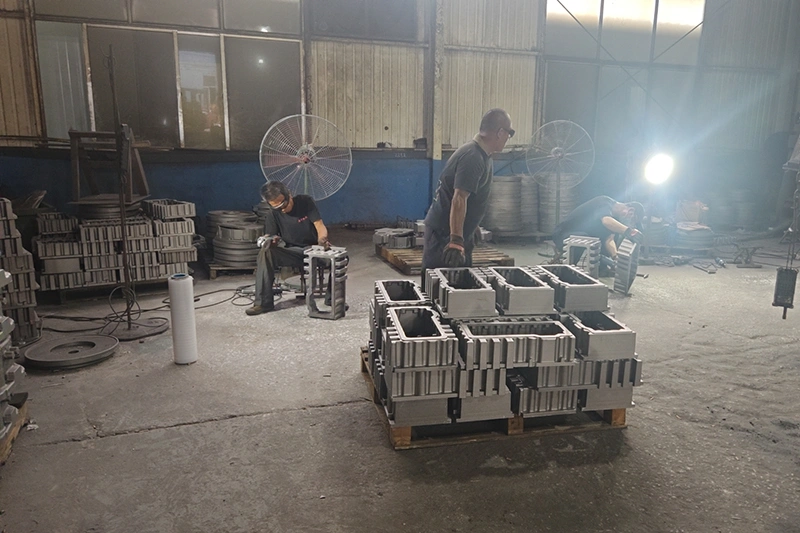
The main difference between silica sand and regular sand is purity – silica sand contains at least 95% pure silicon dioxide, while regular sand is a mix of various minerals with only 50-90% silicon dioxide.
You’ve probably encountered both types without realizing it. The sand in your kid’s sandbox? That’s regular sand. The sand used to make the glass windows in your home? That’s silica sand.
The confusion is understandable – they look similar to the untrained eye. Both are granular, both feel gritty between your fingers, and both come from the earth. But their chemical makeup, physical properties, and best uses couldn’t be more different.
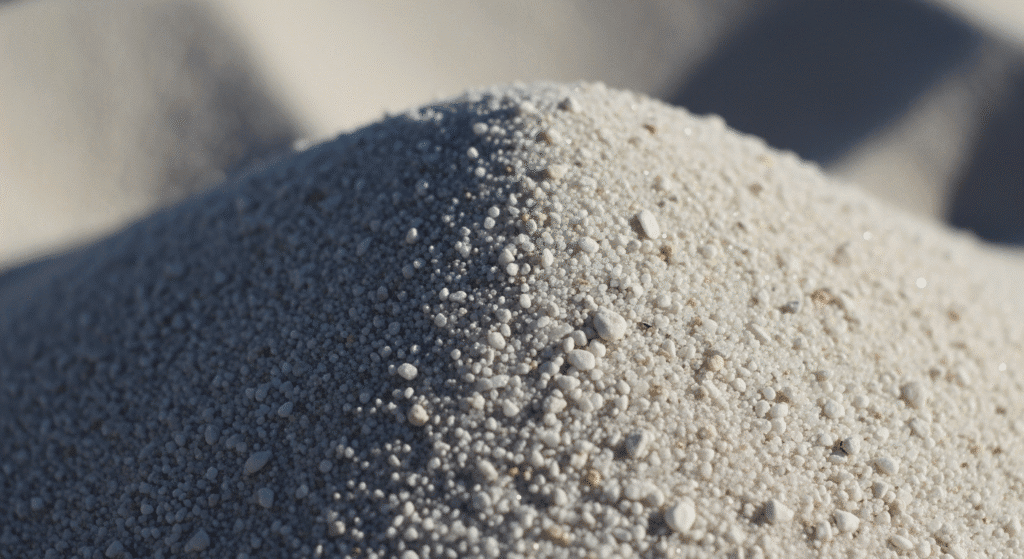
Silica sand is sand that’s made up of at least 95% pure silicon dioxide (SiO₂). This high purity makes it incredibly valuable for industrial applications like glass making, sand casting, and water filtration.
Think of silica sand as the “refined sugar” of the sand world. Just like refined sugar is pure sucrose with impurities removed, silica sand is pure quartz with most other minerals filtered out.
You’ll find silica sand in places where ancient seas or rivers deposited quartz over millions of years. The sand grains are typically angular and uniform in size, ranging from 0.5mm to 2mm. When you look at it closely, it’s usually bright white or slightly yellow, though it can be other colors depending on trace minerals.
The high melting point of silica sand (around 1,700°C or 3,090°F) makes it perfect for high-temperature industrial processes. This is why foundries use it to create molds that can withstand molten metal.
Regular sand is a mix of various minerals and rock fragments, with silicon dioxide making up anywhere from 50% to 90% of its composition. The rest includes feldspar, mica, iron oxides, and organic matter.
You’ll find regular sand at beaches, riverbeds, and deserts. Each location creates sand with a unique mineral makeup – beach sand might contain shell fragments, while desert sand often has more iron oxide, giving it a reddish color.
Regular sand grains come in all shapes and sizes. Beach sand tends to be rounded from years of water erosion, while desert sand is more angular. The color varies wildly too – from the black volcanic sands of Hawaii to the pink coral sands of Bermuda.
Most construction projects use regular sand because it’s abundant and affordable. It works perfectly for making concrete, filling sandboxes, and leveling ground for foundations.
The biggest difference between silica sand and regular sand is purity. Silica sand contains at least 95% silicon dioxide, while regular sand typically contains 50-90% silicon dioxide mixed with other minerals.
This purity difference is like comparing distilled water to tap water. Distilled water is pure H₂O, while tap water contains various dissolved minerals. Similarly, silica sand is almost pure quartz, while regular sand is a mineral cocktail.
Silica sand grains are remarkably uniform in size and shape, typically angular with sharp edges. Regular sand grains vary wildly in both size and shape, depending on their source and how they formed.
Color is another obvious difference. Silica sand is usually white or pale yellow due to its purity. Regular sand can be almost any color – tan, brown, black, pink, or even green – depending on its mineral content.
Silica sand dominates high-tech and precision industries. It’s essential for making glass, computer chips, solar panels, and optical fibers. Foundries rely on it for metal casting because it maintains its shape at extreme temperatures.
Regular sand serves more basic construction needs. It’s the backbone of concrete production, road construction, and general building projects. You’ll also find it in playgrounds, golf course bunkers, and beach volleyball courts.
Mining silica sand requires finding deposits with naturally high quartz content. Miners then wash, dry, and screen the sand to remove impurities and achieve consistent grain size.
Regular sand extraction is much simpler. It’s often scooped directly from riverbeds, beaches, or quarries with minimal processing. Sometimes it’s washed to remove salt or organic matter, but that’s about it.
Silica sand poses unique health risks when its dust becomes airborne. Breathing crystalline silica dust can cause silicosis, a serious lung disease. Industries using silica sand must implement strict dust control measures.
Regular sand is generally safer to handle. While any fine dust can irritate your lungs, regular sand doesn’t carry the same severe health risks as crystalline silica.