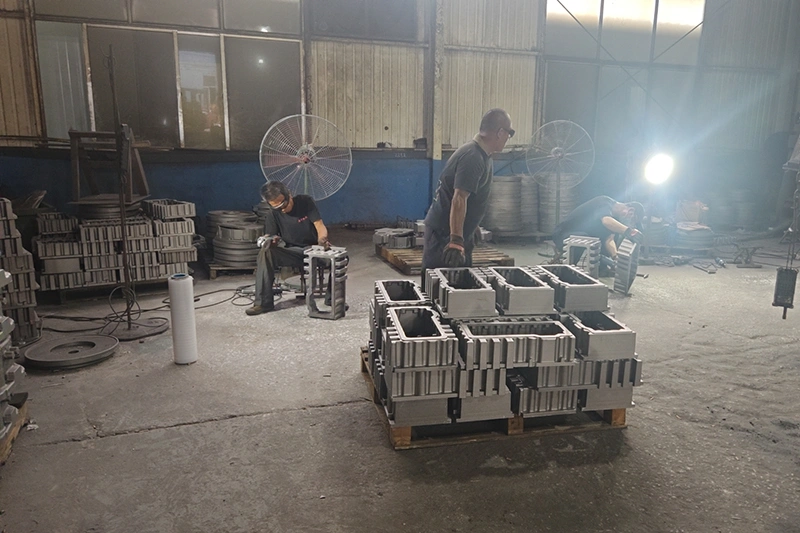
The mixture of sand in sand casting consists of three main ingredients: silica sand (85-95%), a binder like clay or resin (4-10%), and water or other additives (1-5%). This specific combination creates a moldable material that’s strong enough to hold molten metal yet breaks away easily once the metal cools.
Think of it like making a sandcastle at the beach. Dry sand won’t hold its shape, but add just the right amount of water and suddenly you can build complex structures. Sand casting works the same way, except the stakes are much higher – you’re pouring metal that’s hot enough to melt glass into your mold.
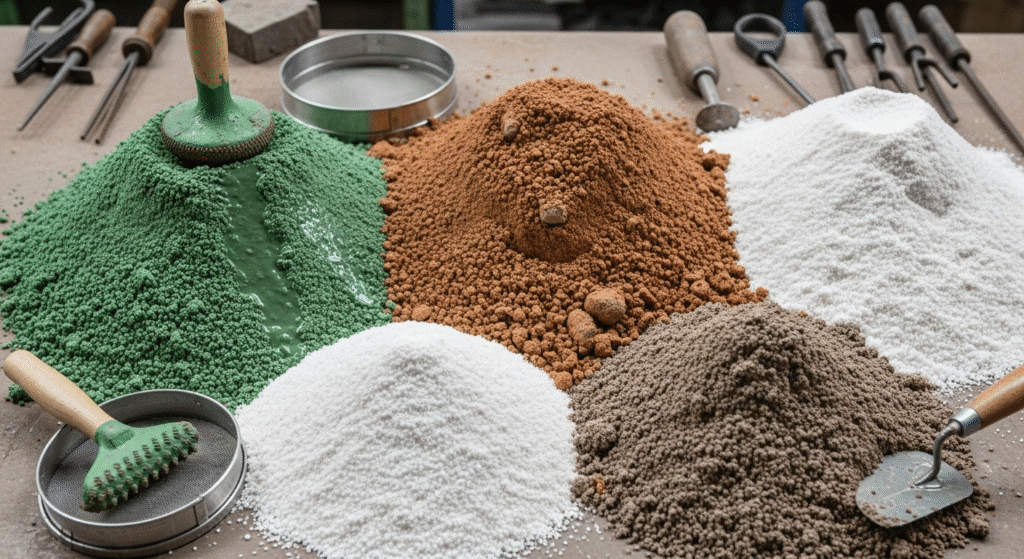
Silica sand makes up the bulk of any casting mixture because it can withstand temperatures over 3,000°F without melting. You need sand with rounded grains between 40-220 mesh size (about the texture of table salt to fine powder).
The sand must be clean and free from impurities. Any organic material or minerals with low melting points will cause defects in your final casting.
Bentonite clay is the most common binder in green sand casting (called “green” because the mixture contains moisture, not because of its color). This clay swells when wet, creating strong bonds between sand grains.
The clay content typically ranges from 7-12% for iron castings and 4-8% for lighter metals. Too much clay makes the mixture sticky and hard to work with, while too little won’t hold the mold’s shape.
Water activates the clay binder and creates the mixture’s moldability. The moisture content usually sits between 2-4% for most applications.
Getting the water content right is crucial. Too dry, and your mold crumbles when you remove the pattern. Too wet, and steam bubbles form when hot metal hits the mold, creating surface defects.
You can test moisture by squeezing a handful of prepared sand. It should hold together firmly but break cleanly when you snap it in half.
Coal dust or sea coal (2-5%) creates a reducing atmosphere that prevents the metal from oxidizing and improves surface finish. When the hot metal hits the mold, the coal creates a thin gas layer that stops the metal from sticking.
Wood flour (0.5-2%) increases collapsibility, making it easier to remove the casting. It burns away during pouring, leaving tiny voids that let the sand break apart.
Corn flour or dextrin (0.25-1%) boosts the mixture’s strength when you need more detailed impressions or thinner mold sections.
Green sand remains the most popular choice because it’s economical and reusable. A typical recipe includes:
This mixture works for about 90% of all sand castings worldwide. You can adjust it slightly based on the metal you’re pouring and the complexity of your part.
Resin-bonded sand uses chemical binders instead of clay. Mix sand with 1-3% phenolic or furan resin, add a catalyst, and the mixture hardens at room temperature or with gentle heat.
This creates stronger, more precise molds perfect for automotive engine blocks or aerospace components. The downside? It costs more and you can’t reuse the sand as easily.
Oil sand uses linseed oil (2-4%) as the binder. Heat the mixture to 400°F and the oil polymerizes, creating a hard shell.
Small foundries like this method for cores because it requires minimal equipment. Just mix, pack into a core box, and bake.