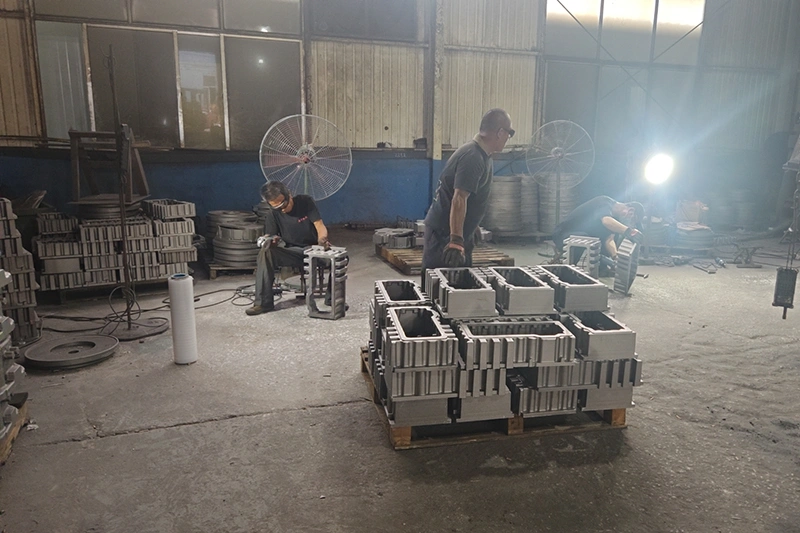
The right sand makes all the difference in*aluminium casting – it determines whether you get a smooth, precise metal part or a rough, defective one.
Foundries primarily use five types of sand: silica, chromite, zircon, olivine, and synthetic ceramic sands, each chosen for specific properties like heat resistance, surface finish quality, and cost-effectiveness.
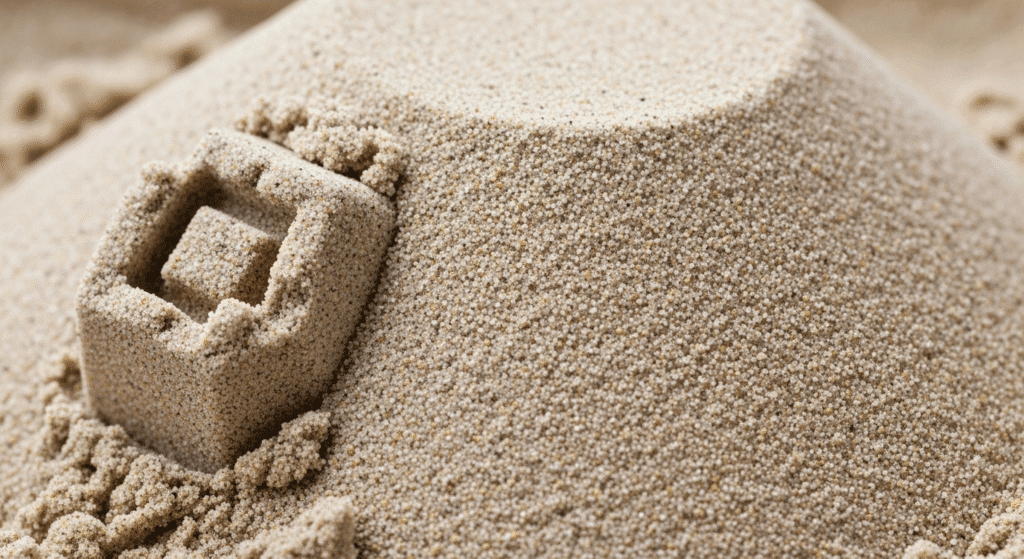
Silica sand is the workhorse of aluminum foundries – it’s cheap, abundant, and gets the job done for 90% of casting applications. This sand is basically crushed quartz, the same mineral you’d find on most beaches, but carefully graded to specific sizes for casting work.
Its popularity comes down to three things: it’s everywhere (making it affordable), it handles aluminum’s melting temperature just fine, and it’s easy to work with. You can reuse silica sand multiple times by simply cleaning and reconditioning it.
The main drawback? Silica sand can cause surface defects called “burn-in” when casting complex shapes. It’s like trying to make detailed sandcastles with coarse beach sand – you’ll get the basic shape, but fine details might get lost.
Chromite sand is the premium option that foundries turn to when they need exceptional surface quality and dimensional accuracy. Made from crushed chromite ore, this dark sand conducts heat away from the molten aluminum faster than silica, preventing many common casting defects.
Picture chromite sand as the high-performance tire of the casting world. Just as racing tires grip better but cost more than regular tires, chromite sand gives superior results but at roughly three times the price of silica.
The rapid cooling it provides is particularly valuable for thin-walled castings or parts with intricate details. Automotive manufacturers often use chromite sand for engine components where surface smoothness directly affects performance.
Zircon sand sits at the top of the casting sand hierarchy, offering the best thermal stability and finest surface finishes possible. This sand comes from zirconium silicate minerals and can withstand extreme temperatures without expanding or breaking down.
What makes zircon special is its incredibly low thermal expansion – it barely changes size when heated. Imagine a ruler that stays the same length whether it’s in a freezer or an oven. This stability means castings come out with precise dimensions every time.
The catch? Zircon sand costs five to ten times more than silica sand. Foundries reserve it for aerospace components, precision instruments, and other parts where perfection justifies the price.
Olivine sand offers a unique advantage: it’s the safest option for workers and the environment. Unlike silica sand, which can cause lung disease with prolonged exposure, olivine sand poses minimal health risks while still delivering good casting results.
This greenish sand (yes, it’s actually green like olives) comes from volcanic rocks and has excellent high-temperature properties. It’s particularly good at resisting metal penetration, which means you get cleaner casting surfaces with less finishing work needed.
European foundries have widely adopted olivine sand due to strict health regulations. While it costs about twice as much as silica sand, many companies consider the improved worker safety worth the investment.
Synthetic ceramic sands represent the cutting edge of casting technology – they’re manufactured in furnaces to have perfect, spherical grains with precisely controlled properties. Think of them as the difference between natural diamonds and lab-grown ones: engineered for consistency and performance.
These sands start as bauxite or other materials that get melted and formed into tiny ceramic beads. The round shape means better flowability (the sand packs more uniformly) and superior surface finishes on cast parts.
The consistency is the real game-changer. While natural sands vary from batch to batch, synthetic sands deliver identical performance every time. This predictability is crucial for high-volume production where even small variations can cause expensive defects.
Synthetic sands also last longer than natural alternatives. You can recycle them dozens of times before they break down, which helps offset their higher initial cost (typically three to four times that of silica sand).
Silica sand dominates the aluminum casting industry, accounting for about 90% of all foundry sand use. Its low cost and wide availability make it the default choice for most general casting applications.
Yes, most casting sands can be reclaimed and reused multiple times. Silica sand typically gets 5-10 uses, while synthetic ceramic sands can be recycled 50+ times before needing replacement.
Sand molds are cheaper to make, especially for complex shapes or one-off parts. They also allow gases to escape during casting, preventing bubbles and defects that might occur with solid metal molds.
Consider three factors: the required surface finish, dimensional tolerance needs, and your budget. Use silica for basic parts, chromite or olivine for better quality, and zircon or synthetic sands for precision work.
Most aluminum castings use sand with grain sizes between 40-100 AFS (American Foundry Society) number. Finer grains (higher numbers) give smoother surfaces but reduce gas permeability.
Silica sand poses health risks if inhaled repeatedly over time, potentially causing silicosis. Always wear proper respiratory protection when handling dry sand. Olivine and synthetic sands are much safer alternatives.