A 2024 HICX survey found that 98% of global suppliers identify communication quality as their primary area for improvement. They know it’s their weakness. Yet most foundry selection guides focus almost entirely on certifications and equipment lists.
Selecting a casting foundry essentially entrusts your entire production to them. Custom patterns and tooling create switching costs that make early mistakes expensive. In my experience evaluating foundries across industries, I’ve learned to pay more attention to how suppliers respond during the quoting process than to the certificates on their wall. The suppliers who answer quickly, ask clarifying questions, and provide detailed quotes are almost always the ones who handle production problems well.
Your discovery method shapes your candidate pool. Before evaluating anyone, you need a shortlist worth evaluating.
Start with manufacturing directories like ThomasNet, Kompass, or industry-specific databases. For sand casting, the American Foundry Society maintains a supplier directory searchable by capability, material, and location. Chinese suppliers cluster heavily in Shandong Province, which houses approximately 60% of major sand casting facilities.
Filter by your specific requirements: material type, weight range, annual volume, and any required certifications. This eliminates obvious mismatches before you spend time on quotes.

Trade shows offer something directories cannot: face-to-face assessment of how suppliers present themselves. Cast Expo, GIFA, and regional foundry conferences let you evaluate communication style, technical depth, and organizational professionalism in person.
Industry networks and referrals often surface suppliers you’d never find through directories. Engineering contacts who have worked with foundries can tell you what the sales materials won’t.
Ask potential suppliers for customer references in similar applications. Then actually call those references. The questions that matter most: How does this foundry handle problems when they occur? How responsive are they to urgent requests? Would you use them again?
The quoting process is your free trial of working with a supplier. Most buyers treat it as purely transactional. That’s a mistake.
If it’s hard to get in touch with suppliers before they have your business, you can bet it will be a lot worse once you send them a check. Track response times, question quality, and communication patterns during quoting. These behaviors predict post-order performance with surprising accuracy.
A manufacturing shop that implemented quoting automation saw response times drop from two days to one hour. Their revenue increased 300%. Fast response reflects operational efficiency, not just sales eagerness. Suppliers who quote quickly typically have organized operations, clear internal communication, and capacity to take on new work.
When you send an RFQ, note:
Certifications tell you what systems a foundry HAS. Communication reveals how they USE those systems.
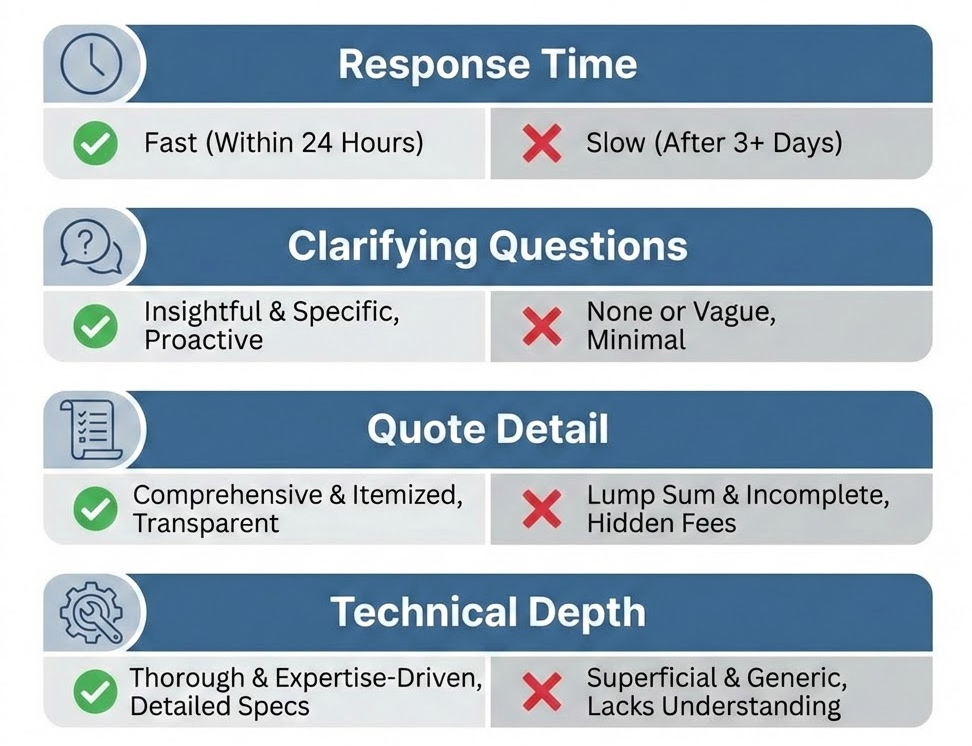
Technical evaluation still matters. But evaluate capabilities through the lens of how suppliers communicate about them, not just whether they exist.
Ask about current capacity utilization. Suppliers operating below 60% capacity may indicate lack of competitiveness or declining business. Over 80% capacity risks production delays and scheduling conflicts. The 60-80% range suggests healthy demand without overload.
Request specifics on molding equipment, melt capacity, and maximum pour weights. A quality foundry can provide this information quickly and completely. Hesitation or vague answers suggest either disorganization or something to hide.
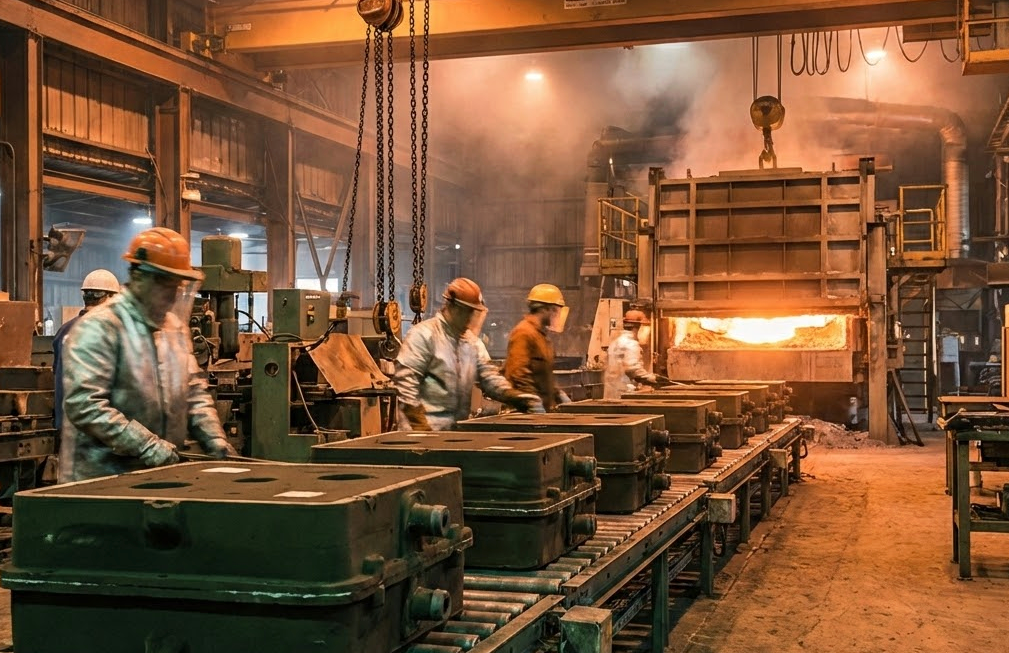
Greensand foundries with less than 1% internal scrap rate are performing well. Ask for actual defect rate data over six to twelve months, not just certification numbers. In-house testing capabilities (spectrometer, CMM, NDT equipment) indicate quality commitment beyond minimum requirements.
In-house pattern making provides better control over quality and modifications. Foundries that outsource patterns add communication layers and potential delays. Ask about pattern maintenance programs and modification turnaround times.
The OEM guide to sand casting covers specification basics if you’re new to casting procurement.
Qualification costs are real: engineering time, sample testing, travel for audits, and tooling investments. Choosing a supplier that fails financially within two years wastes that entire investment.
Watch for these indicators:
A financially stressed foundry won’t tell you they’re struggling. Their behavior will.
Pursue international sourcing only when projected savings reach 25% or more. Below that threshold, hidden costs typically negate apparent savings.
Those hidden costs include: extended lead times, shipping and logistics complexity, communication overhead from time zones and language barriers, travel costs for audits and issue resolution, and intellectual property exposure.
Domestic sourcing advantages concentrate in three areas: real-time communication for urgent issues, easier quality oversight through site visits, and faster problem resolution when defects occur. For complex parts requiring engineering collaboration, these advantages often outweigh cost differences.
International sourcing works best for high-volume, stable-design components where the relationship has matured beyond the steep learning curve of initial qualification.
A trial order is your last checkpoint before production commitment. Companies with strong supplier qualification programs see supplier deviations drop 40% and on-time-in-full delivery rates reach 96%, compared to 82% for unqualified suppliers.
Structure your trial order to test the capabilities that matter most:
The trial order reveals operational reality. A smooth trial with good communication predicts smooth production. Problems during trial, especially communication problems, will amplify at scale.
Prioritize your evaluation in this order:
The foundry that responds quickly, asks good questions, and provides detailed quotes is telling you how they’ll behave when production problems arise. Listen to what that behavior says.