KT METAL CASTING LOGO

KT Metal Castings Blogs

Types of Heat Treatment in Metal Casting

Heat treatment is a critical post-casting step to refine the microstructure and mechanical properties of metal components. By carefully heating a casting to specific temperatures, holding (soaking) for controlled times, and cooling in defined ways, foundries can tailor hardness, strength, ductility, toughness, wear resistance, and residual stress. Typical heat treatments…

Investment Casting Design Guidelines

Investment casting creates metal parts with excellent surface finish and tight tolerances. To get the best results, you need to follow specific design rules. Wall Thickness Wall thickness is one of the most critical factors in investment casting design. You can achieve walls as thin as 0.75 mm (0.030 inches)…

What is Gas Porosity in Metal Casting

Gas porosity is a defect where dissolved gases create bubbles that get trapped as metal solidifies during the casting process. When metal is molten, it can hold much more gas than when it’s solid. As the metal cools, excess gas forms bubbles that become permanent voids in the final casting.…

What is the Difference Between Shrinkage and Gas Porosity

Shrinkage cavity and gas porosity are two distinct types of casting defects that occur during metal solidification. Shrinkage creates jagged voids when cooling metal contracts, while gas porosity forms smooth, round bubbles from trapped gases. What is Shrinkage Defects Shrinkage defects are cavities that form when molten metal contracts during…

How to Reduce Porosity in Investment Casting

Porosity defects are unwanted holes or cavities that form in metal castings, making parts weaker and more likely to fail. In investment casting, porosity is one of the most common problems manufacturers face. There are three main types of porosity: gas porosity (smooth, round bubbles), shrinkage porosity (jagged, tree-like cavities),…

Investment Casting vs. CNC Machining: Which Manufacturing Method Should You Choose

The main difference between investment casting and CNC machining is how the material is shaped. Investment casting creates parts by pouring molten metal into wax-based molds, ideal for complex geometries. CNC machining cuts material from a solid block, offering higher precision, faster turnaround, and better suitability for tight tolerances. What…

What Is Shrinkage in Casting Defects

Shrinkage in metal casting describes internal cavities or surface sink marks that form because molten metal contracts by roughly 1–6 % during solidification. Without properly placed risers to supply extra liquid metal, the solidifying metal cannot fill the volume loss, leaving voids that weaken the finished part. What Is Shrinkage…

Common Defects in Investment Casting and Their Causes

The most common defects in investment casting include shrinkage, porosity, misruns, cold shuts, and inclusions. Shrinkage is caused by improper solidification; porosity results from trapped gas; misruns and cold shuts stem from low metal temperatures; inclusions occur due to ceramic shell breakdown or contamination. Cavity-Type Defects Gas Porosity Gas porosity…

History and Evolution of Metal Casting

Metal casting originated around 3200 BCE in Mesopotamia. Ancient civilizations used it to create tools, weapons, and art. During the Industrial Revolution, casting evolved with the introduction of sand casting and mechanized production. Modern casting uses advanced alloys, 3D modeling, and precision controls for mass manufacturing. The Dawn of Metallurgy…

What Is the Difference Between Cast Steel and Forged Steel

Cast steel and forged steel are two distinct manufacturing methods that produce steel components with different properties and characteristics. Cast steel is made by pouring molten steel into molds, while forged steel is shaped by applying compressive forces to heated steel. Each process creates unique grain structures, mechanical properties, and…

CONTACT

contact Us
by email or form
Please feel free to contact us.
Email: [email protected]
We will response your inquiries within 48 hours.
Office: Weifang City, Shandong Province, China.
©︎ 2025 KT METAL CASTINGS Inc.
We Are Here To Help!
Get A Free Quote Within 48 Hours!
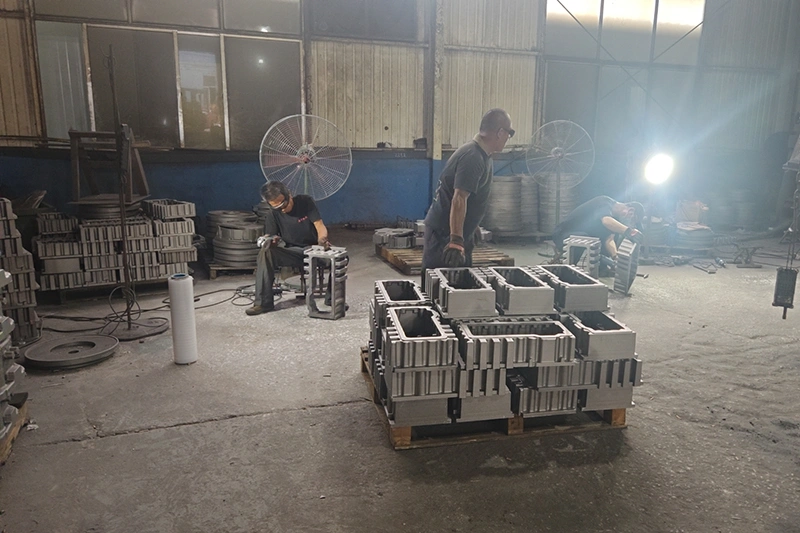
two men work in a warehouse on sand casting, with a fan providing airflow in the background