
KT METAL CASTING LOGO

KT Metal Castings Blogs

Sand Casting Minimum Order Quantity: What to Expect from Foundries

Less than a century ago, cast iron foundries serving small orders existed in every major city. Today, they are much harder to find. This market shift leaves buyers uncertain about minimum order quantities when sourcing sand castings. Sand casting offers much lower MOQ than die casting, but “low” means different…
How Much Does Sand Casting Cost? Pricing Factors Explained

What determines sand casting cost? The answer depends on whether you evaluate piece price alone or total cost of ownership. According to the American Society for Quality, quality-related costs can account for 15-40% of total manufacturing expenses when not proactively addressed. That gap between quoted price and actual cost catches…

Sand Casting Shrinkage Allowance: Calculation and Compensation

“Casting shrinkage calculations are a black art best left to old pattern makers that have many years of experience making mistakes.” That quote from a veteran pattern maker captures what many practitioners feel when tackling shrinkage allowance. But here’s what those years of mistakes taught me: the complexity isn’t in…

Sand Casting Pattern Design: Types, Materials, and Best Practices

Choosing the wrong pattern material or type can add months to your project timeline and thousands to your budget. The pattern creates the mold cavity that shapes your final casting, so every decision here ripples through the entire production process. This guide covers the pattern types you’ll encounter, how to…

Steel Sand Casting: Carbon Steel, Alloy Steel, and Stainless Options

A 1020 steel clevis snapped under pressure during routine operation. The failure analysis revealed carbon content at 0.13%—below the 0.18-0.23% specification—and no heat treatment had been applied. The foundry had delivered exactly what was ordered. The problem was the specification itself. From a sourcing perspective, this pattern repeats across industries.…

Gray Iron Sand Casting: When to Use and Material Grades

Test bars lie. Not intentionally, but the numbers on your material certificate come from a standardized sample that cooled at a rate your actual casting probably never experienced. Foundry engineers confirm that results from test coupons are typically 10-20% higher than properties measured in actual castings. The larger your casting’s…

Aluminum Sand Casting: Lightweight Parts for Industrial Applications

When automotive manufacturers switched from cast iron to aluminum engine blocks, they achieved 40-55% weight reduction. That single change demonstrates why aluminum sand casting has become the go-to process for industrial applications where weight matters. This guide covers the mechanics behind aluminum’s weight advantage, key specifications you need to know,…

Sand Casting Surface Finish: Ra Values and Improvement Methods

Engineers often specify surface finish requirements without knowing what sand casting can actually achieve. A designer grabs a typical limit like 125 RMS or 63 Ra without specifying where on the casting, how to inspect it, or whether that finish is even necessary. The result is over-specification that adds cost…

Valve Body Sand Casting: Pressure Rating and Material Standards

A Class 300 valve does not handle 300 PSI. That number refers to ASME B16.34 pressure-temperature rating tables, not actual working pressure. A Class 300 carbon steel valve handles approximately 740 PSI at ambient temperature but only 450 PSI at 400C. Get the relationship wrong between pressure class, material, and…

Sand Casting vs Forging: Strength, Cost, and Application Differences

A food processing equipment manufacturer faced repeated failures in their high-pressure meat grinding cylinders. The forged steel components cracked within months, despite meeting all strength specifications. The fix? Switching to castings. The forged parts failed not because they were weak, but because their strength worked in only one direction while…

CONTACT

contact Us
by email or form
Please feel free to contact us.
Email: [email protected]
We will response your inquiries within 48 hours.
Office: Weifang City, Shandong Province, China.
©︎ 2025 KT METAL CASTINGS Inc.
We Are Here To Help!
Get A Free Quote Within 48 Hours!
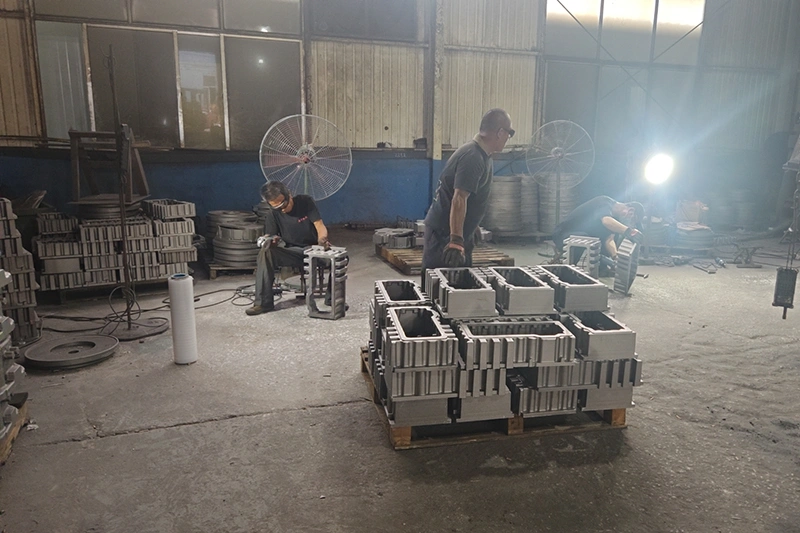
two men work in a warehouse on sand casting, with a fan providing airflow in the background