KT METAL CASTING LOGO

KT Metal Castings Blogs

What Are the Different Types of Grinding Media

Grinding media are the materials used inside ball mills, bead mills, and other grinding equipment to break down raw materials into smaller particles. The five main types include forged steel balls, cast iron balls, stainless steel balls, ceramic media (alumina, zirconia, zirconium silicate), and glass beads. Each type offers specific…

What is the Difference Between Deburring and Polishing

In industrial metal manufacturing, deburring and polishing are often mentioned in the same breath — and for good reason. Both are finishing processes that improve the quality, performance, and appearance of metal parts. Yet, they serve very different purposes, occur at different stages of production, and use different tools and…

Types of Grinding Methods

Grinding is a precision machining process that uses a rotating abrasive wheel to remove material from a workpiece. Unlike single-point cutting tools, each abrasive grain acts as a small cutting edge, gradually shearing away microscopic chips. Different grinding methods vary in how the workpiece and wheel move relative to each…

What is the Difference Between Grinding and Deburring

In metal manufacturing, the journey from raw stock to a finished, high-performing component is rarely complete after the initial shaping. Two finishing processes—grinding and deburring—play critical roles in ensuring that parts meet design specifications. They are often confused because both involve refining a part’s surface. But here’s the key: grinding…

How to Deburr Holes in Metal Parts by Hand

Every drilled hole leaves behind a nasty surprise. Those tiny, razor-sharp metal edges called burrs might look harmless, but they’ll slice your fingers open faster than you can say “where’s the Band-Aid?” Here’s the thing most beginners don’t realize: burrs aren’t just a safety hazard. They cause parts to fit…

What Is Deburring

Deburring is the process of removing small, unwanted pieces of metal from the edges or surfaces of a cast part. These unwanted pieces are called burrs or flash. They are a normal by-product of casting and other manufacturing processes. Deburring takes place after the casting is removed from its mold…

Tapped Hole vs. Drilled Hole: What’s the Difference and How to Choose

In manufacturing, a small design detail can make the difference between a smooth assembly and a costly production delay. One of the most overlooked yet critical choices is whether to use a tapped hole or a drilled hole. A drilled hole is simply an unthreaded opening created by removing material…

What Is Cold Chamber Die Casting

Cold chamber die casting is a metal casting process that produces precise, complex parts by injecting molten metal into reusable steel molds under high pressure. The key difference between hot chamber and cold chamber die casting lies in how the metal is melted and delivered—cold chamber systems keep the melting…

What’s the Difference Between Hot Chamber and Cold Chamber Die Casting

The key difference between hot chamber and cold chamber die casting lies in where the furnace is located. Hot chamber systems have the furnace built into the casting machine itself, while cold chamber systems keep the furnace separate. Hot chamber die casting works best for low-melting-point metals like zinc and…

CONTACT

contact Us
by email or form
Please feel free to contact us.
Email: [email protected]
We will response your inquiries within 48 hours.
Office: Weifang City, Shandong Province, China.
©︎ 2025 KT METAL CASTINGS Inc.
We Are Here To Help!
Get A Free Quote Within 48 Hours!
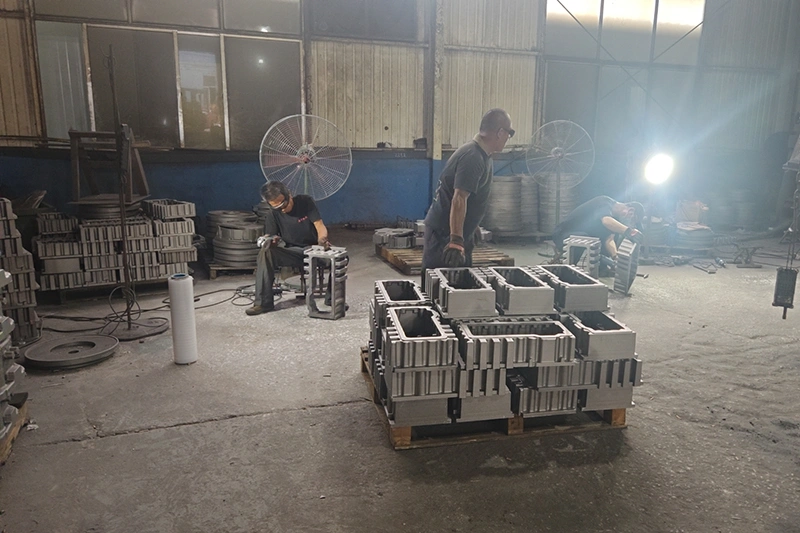
two men work in a warehouse on sand casting, with a fan providing airflow in the background