KT METAL CASTING LOGO

KT Metal Castings Blogs

What is the Difference Between GGG-50 and GGG-40

GGG-50 and GGG-40 are two grades of ductile cast iron that differ primarily in their strength and ductility balance. GGG-50 offers 25% higher tensile strength (500 MPa vs 400 MPa) and better wear resistance, while GGG-40 provides double the elongation (15% vs 7%) and superior impact toughness. This fundamental trade-off—strength…

How Long Does It Take for Stainless Steel to Rust

Stainless steel can remain rust-free for decades indoors, start showing rust within months near saltwater, or develop corrosion in mere weeks if exposed to harsh chemicals. The exact timeline depends on the steel grade you’re using and the environment it’s exposed to. Rust Timelines for Common Stainless Steel Grades Type…

Can Stainless Steel Rust

You bought a shiny new stainless steel refrigerator, expecting it to look perfect forever. Six months later, rusty spots appear near the handle. What went wrong? You’re not alone. Thousands of homeowners feel cheated when their “stainless” steel products start rusting. Some even wonder if they got scammed with fake…

What is the Difference Between 304 and 316 Stainless Steel

The main difference between 304 and 316 stainless steel is that 316 contains 2-3% molybdenum while 304 has none, giving 316 superior corrosion resistance especially against chlorides and making it about 20-50% more expensive than 304. Both are austenitic stainless steels with excellent overall properties. 304 works perfectly for most…

Types of Stainless Steel and Grades

Stainless steel contains at least 10.5% chromium, which forms a protective oxide layer that prevents rust and corrosion. This versatile material comes in five main families—austenitic, ferritic, martensitic, duplex, and precipitation-hardening—each with unique properties that make them suitable for different applications. Composition of Stainless Steel Types of Stainless Steel Austenitic…

How to Weld Stainless Steel

Stainless steel welding requires specific techniques and careful attention to detail that go beyond regular steel welding. The material’s unique properties – high chromium content for corrosion resistance, lower thermal conductivity, and higher thermal expansion – make it both valuable and challenging to work with. Can You Weld Stainless Steel…

What Is the Melting Point of Steel

Steel melts between 1370°C and 1540°C (2500°F to 2800°F), depending on its composition. Unlike pure iron which melts at exactly 1538°C, steel transitions from solid to liquid over a temperature range because it’s an alloy of iron, carbon, and other elements. The carbon content is the biggest factor affecting steel’s…

Does Aluminum Rust or Corrode

You’ve probably seen old aluminum siding turn dull gray. Or noticed white powder forming on an aluminum ladder. Your first thought might be: “Is that rust?” Here’s the thing that confused me when I first studied chemistry: we use “rust” and “corrode” like they mean the same thing. They don’t.…

Comparison of Yield Strength vs. Tensile Strength in Aluminum Alloys

Understanding the difference between yield strength and tensile strength can save you from catastrophic failures in aluminum structures. These two properties determine whether your aluminum part will bend, break, or hold up perfectly under stress – yet many engineers confuse them or use them interchangeably. Yield strength tells you when…

What is the Yield Point of a Metal

The yield point is the stress level where a metal starts to permanently deform. Below this stress, the metal behaves like a spring – it bends but bounces back to its original shape when you release the force. Above the yield point, the metal stays bent even after you remove…

CONTACT

contact Us
by email or form
Please feel free to contact us.
Email: [email protected]
We will response your inquiries within 48 hours.
Office: Weifang City, Shandong Province, China.
©︎ 2025 KT METAL CASTINGS Inc.
We Are Here To Help!
Get A Free Quote Within 48 Hours!
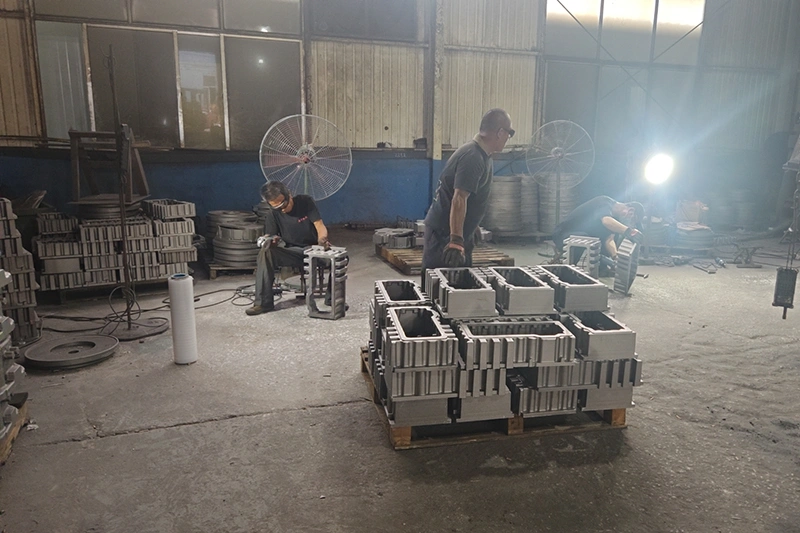
two men work in a warehouse on sand casting, with a fan providing airflow in the background